
You know that frustrating moment when your favorite kitchen knife starts mangling tomatoes instead of slicing them? Or when your garden pruners crush plant stems rather than making clean cuts? These aren't just minor inconveniences: they're clear signals that your tools need professional attention.
As someone who's been sharpening tools for Seattle-area customers for years, I've seen countless folks struggle with dull blades, not realizing how much easier their work could be. Whether you're prepping dinner in your Capitol Hill kitchen or maintaining your Ballard garden, recognizing these warning signs will save you time, frustration, and potentially prevent injury.
Let's dive into the five telltale signs that it's time to search for "tool sharpening near me" and get your blades back to peak performance.
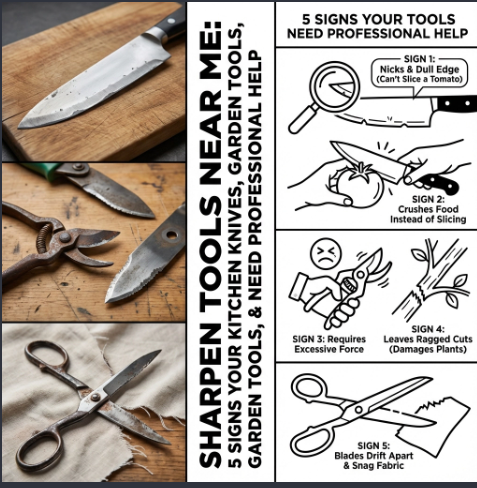
Sign #1: You're Using Excessive Force to Make Cuts
The Kitchen Knife Test
A sharp knife should glide through food with minimal pressure. If you find yourself bearing down on your blade to slice through a simple onion or pushing hard to cut vegetables, your knife has lost its edge. This isn't just inefficient: it's dangerous. When you have to apply extra force, you're more likely to slip and cut yourself.
Garden Tool Reality Check
Your pruning shears should snip through branches with a satisfying click. When you're straining to cut through stems that used to be easy work, or when you have to make multiple attempts at the same cut, it's time for professional garden tool sharpening near me. The same goes for hedge trimmers that require you to push harder or make multiple passes.

Scissors Struggle
Whether you're cutting fabric, paper, or opening packages, scissors should require only gentle pressure. If you're squeezing hard and still getting incomplete cuts, or if you find yourself "chewing" through materials instead of cutting cleanly, those blades need attention.
Why This Matters: Using excessive force doesn't just tire you out: it can damage both your tools and the materials you're cutting. Worse yet, it significantly increases your risk of accidents.
Sign #2: Your Cuts Are Ragged and Uneven
Kitchen Knife Warning Signs
A properly sharpened knife creates clean, even cuts that don't bruise or crush your food. If your knife is producing jagged edges on vegetables, squashing tomatoes instead of slicing them, or leaving rough, uneven surfaces on meat, the blade edge has deteriorated. Fresh herbs like basil and cilantro are particularly telling: a sharp knife will cut them cleanly, while a dull one will bruise and blacken the edges.
Garden Tool Indicators
When your pruning cuts start looking rough or torn instead of clean and smooth, you're creating entry points for disease and pests in your plants. Healthy pruning requires a sharp blade that makes clean cuts that heal quickly. If you're seeing frayed or crushed stems, it's definitely time to find "sharpen tools near me" services.
Scissors Performance
Paper should have clean, straight edges after cutting. Fabric cuts should be precise without fraying. If you're getting wavy lines, incomplete cuts, or materials that look torn rather than cut, your scissors need professional attention.
Sign #3: Tools Slip or Wander During Use
The Cutting Board Slide
One of the clearest signs your kitchen knife needs sharpening is when it stops "biting" into your cutting board. A sharp blade will grip the board and stay where you place it. When the knife starts sliding around or wandering off your intended cutting line, the edge has become too rounded to maintain proper contact.
Garden Tool Drift
If your pruning shears slip off branches instead of cutting through them, or if you find yourself repositioning the tool multiple times to complete a single cut, the blades have lost their precision edge. This wandering not only makes your work harder but can damage the plants you're trying to care for.

Safety Concerns
Tool slippage is one of the leading causes of cutting injuries. When your blade doesn't go where you expect it to, accidents happen. Professional sharpening restores that predictable, controlled cutting action that keeps you safe.
Sign #4: Materials Stick to Your Blades More Than Usual
Kitchen Knife Clues
While some food sticking is normal, excessive sticking usually indicates an uneven blade edge. When your knife seems to grab onto every slice of cheese or piece of meat, the blade profile has changed. A properly maintained edge should release food easily, making your prep work flow smoothly.
Garden Tool Buildup
If plant sap, debris, or cut materials seem to cling to your garden tools more than they used to, it could be because microscopic nicks and roughness in the blade are creating catch points. Fresh, clean cuts happen when the blade edge is smooth and properly angled.
The Maintenance Connection
Excessive sticking often means that regular honing isn't working anymore. When your honing rod or sharpening steel no longer restores your knife's performance, it's time for professional reshaping of the blade edge.
Sign #5: Visible Edge Damage or Dullness
What to Look For
Take a close look at your blade edges. Can you see light reflecting off the cutting edge? A sharp blade edge is so thin that it doesn't reflect light: you shouldn't be able to see shiny spots or glimmers along the cutting surface. If you can see the edge catching light, it's become flattened or rounded and needs professional attention.
Chips and Nicks
Small chips, nicks, or visible damage to the blade edge are obvious signs that you need more than just a quick honing. These imperfections won't come out with home sharpening and require the precision tools and expertise that professional services provide.

The Mirror Test
Professional sharpeners often use the "mirror test": running their finger gently along the blade edge (never across it!). A properly sharpened edge should feel smooth and consistent, without any rough spots or irregularities.
Why Professional Sharpening Makes the Difference
Proper Angle Restoration
Each type of tool has an optimal cutting angle. Kitchen knives typically work best at 15-20 degrees per side, while garden tools might need different angles depending on their purpose. Professional sharpening restores these precise angles that you can't achieve with home methods.
Safety First
Beyond the obvious injury prevention, properly sharpened tools reduce fatigue and improve your technique. When your tools work effortlessly, you maintain better control and make cleaner, more accurate cuts.
Tool Longevity
Regular professional maintenance actually extends the life of your tools. Proper sharpening removes minimal material while restoring peak performance, meaning your quality knives, scissors, and garden tools will serve you for years longer.

When to Seek Professional Help
Kitchen Knives: Most home cooks should have their knives professionally sharpened every 6-12 months, depending on usage. If you cook daily, lean toward the shorter timeframe.
Garden Tools: Spring is the perfect time for garden tool sharpening, but if you're gardening year-round in Seattle's mild climate, consider professional service twice a year.
Scissors: These often-overlooked tools should be sharpened annually for heavy users, or whenever you notice the performance issues described above.
Ready to Restore Your Tools?
Don't let dull tools slow you down or compromise your safety. Whether you're searching for "tool sharpening near me" or specifically need "garden tool sharpening near me" in the Seattle area, professional service makes a world of difference.
Your tools work hard for you: isn't it time to give them the professional care they deserve? Contact Sharper Tools today at (206) 841-2315 and experience the difference that truly sharp tools can make in your kitchen and garden.
Visit us at sharper-tools.com to learn more about our comprehensive sharpening services. We'll have your tools cutting like new in no time!