
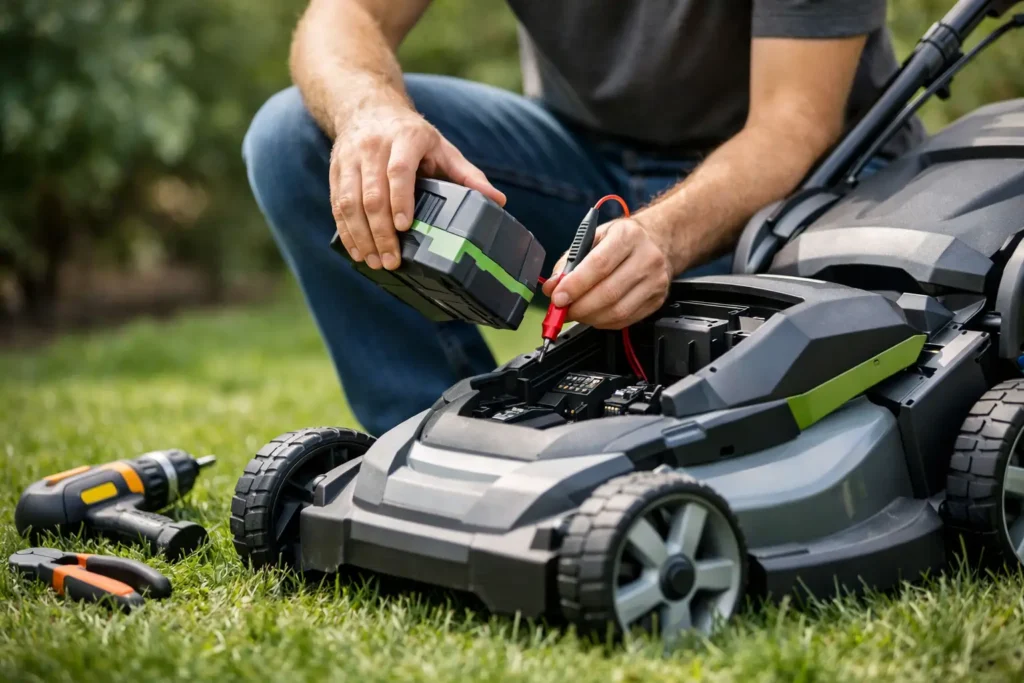
A battery mower that quits halfway through the yard usually does it at the worst possible moment – when the grass is already damp, the clippings are building up, and you just want the job done. These battery lawn mower troubleshooting steps help you sort out the common problems first, so you can tell the difference between a quick fix, a maintenance issue, and a part that really needs service.
Battery mowers are convenient, quieter than gas models, and easier to live with day to day. But when something goes wrong, the cause is often simpler than people expect. A battery that is not fully seated, a safety bar that is not engaged correctly, or a blade clogged with packed grass can all make the mower seem more broken than it really is.
Start with the simple checks first
Before assuming the battery or motor has failed, begin with the basic setup. Make sure the battery is fully charged and locked into place. On many mowers, it can look connected without actually clicking all the way in. If your model uses two battery ports, check the manual or indicators to confirm which slot is active and whether both batteries need charge.
Then look at the safety system. Most battery mowers will not start unless the handle is fully extended and locked, the safety key is inserted if your model uses one, and the start button and bail handle are used in the right sequence. If any one of those pieces is off, the mower stays dead silent.
It also helps to slow down and listen. No sound at all points to power, battery, or safety interlock issues. A brief hum followed by shutdown can suggest blade resistance, overheating, or an electrical fault. If the mower starts but cuts out under load, the problem may be less about electronics and more about mowing conditions or blade condition.
Battery lawn mower troubleshooting steps for a mower that will not start
If the mower will not power on, begin with the battery itself. A charger may show a battery as charged, but that does not always mean it can deliver power under load. Batteries that have been stored in a garage through cold weather or left in high heat can lose performance even when the lights still come on.
Try these checks in order. Inspect the battery terminals for dirt, moisture, or corrosion. Wipe them clean with a dry cloth. If you have a second compatible battery, test it in the mower. That single swap can quickly tell you whether the issue is the battery or the mower.
Next, reset your expectations around temperature. Many lithium-ion batteries will not charge or perform normally when they are too cold or too hot. If the battery came from a chilly shed, bring it indoors and let it warm to room temperature before testing. If it was sitting in direct sun after a long mowing session, let it cool down before charging or restarting.
If the mower still does nothing, check for a blown fuse or tripped internal protection if your model has one. Some brands also have status lights that signal battery faults, overheating, or communication errors between the battery and tool. Those codes are worth checking because they often save time.
When the mower starts but loses power fast
A mower that runs for a few minutes and then fades is often dealing with one of three things: weak battery health, heavy cutting conditions, or a blade and deck that are working harder than they should.
Tall or wet grass puts a big load on battery equipment. That does not mean the mower is faulty. It may simply mean the machine is being asked to do the job in one pass when the lawn really needs two. Raising the deck height for the first cut and mowing more slowly can make a noticeable difference in runtime.
The underside of the deck matters too. Packed wet clippings create drag, and drag drains batteries quickly. With the battery removed and the mower safely disabled, tip the mower according to manufacturer guidance and clean away the buildup. This is one of those maintenance habits that pays off every single time.
Blade condition is another overlooked factor. A dull blade tears instead of slicing cleanly, which means the motor has to work harder. That reduces runtime and often leaves the lawn looking ragged even when the mower seems to be functioning. In many cases, people blame the battery when the real problem is a blade that has lost its edge or taken a small bend after striking debris.
If the cut looks uneven or the mower leaves stragglers
Not every mower problem is electrical. Sometimes the machine runs fine, but the lawn tells you something is off.
Start with the cutting height settings. If one wheel is set differently from the others, the mower can scalp one side and miss patches on the other. It sounds obvious, but it happens more often than you would think, especially after seasonal storage or transport.
Then inspect the blade. A worn or dull blade can leave uncut tips, frayed grass ends, and uneven results. A bent blade can create vibration and an inconsistent cut pattern. If you notice the mower shaking more than usual, stop using it until the blade is checked. Continuing to mow with a damaged blade can stress the motor and the spindle assembly.
For homeowners trying to get a cleaner finish, blade sharpness is one of the highest-value fixes available. A fresh edge helps the mower cut efficiently, preserves battery runtime, and improves the look of the lawn right away. That is one reason local sharpening services remain useful even as more yards switch from gas to battery equipment.
Battery lawn mower troubleshooting steps for overheating and shutdowns
If your mower shuts off in the middle of use and restarts later, overheating is a likely cause. Battery mowers protect themselves by shutting down when the motor or battery gets too hot. That is frustrating, but it is also what prevents larger failures.
Heat buildup usually comes from a combination of conditions rather than one single problem. Thick grass, a dull blade, a dirty deck, and high outdoor temperatures can all stack up. So can trying to mow too low on the first pass.
Let the mower cool completely, then check airflow areas and remove grass buildup around the deck and discharge path. Recharge the battery only after it has cooled. If overheating happens repeatedly in normal mowing conditions, that is the point where the battery may be aging out or the mower may need professional inspection.
What to check before replacing the battery
Batteries are expensive, so it makes sense to rule out other causes first. If runtime has dropped over time, think about the battery’s age, storage habits, and number of charge cycles. Performance usually declines gradually, not overnight.
But there are exceptions. A battery dropped onto concrete, stored in freezing temperatures, or left discharged for long periods can fail early. Even then, compare its behavior with a known-good battery before buying a replacement. Many people end up replacing a battery when the mower actually has a switch, connector, or blade-load issue.
It also helps to inspect the charger. If the charger is not functioning correctly, the battery may never reach full charge even though the process appears normal. Unusual indicator lights, excessive heat, or inconsistent charging times are clues worth noticing.
When the problem is really maintenance, not repair
A lot of battery mower issues come down to routine care. Clean the deck. Keep the battery contacts dry and free of debris. Store batteries indoors in moderate temperatures. Check that the wheels roll freely and the height adjusters are even. Most of all, do not ignore the blade.
A sharp mower blade is not just about appearance. It affects power draw, battery runtime, cut quality, and how hard the motor has to work. If your mower feels weaker than it used to, but the battery checks out, blade service is one of the smartest places to look. For Seattle-area homeowners, Sharper Tools handles mower blade sharpening with the kind of practical turnaround that keeps yard work moving.
When it is time to stop troubleshooting
There is a point where more trial and error stops being useful. If the mower has a burning smell, repeated electrical cutouts, visible wire damage, cracked battery housing, or severe vibration, stop using it. Those are not small convenience issues. They are signs the mower could be unsafe or that a simple home fix may make the damage worse.
The same goes for a blade that is chipped, heavily worn, or bent. Sharpening helps when the edge is dull. It does not correct every form of damage. Sometimes the right call is sharpening, and sometimes it is replacement. It depends on the condition of the steel and how much material is left.
A mower should make yard work simpler, not become its own weekend project. If you work through the basics carefully, you can usually narrow the problem down fast and avoid replacing parts that still have life left in them. And when the issue turns out to be maintenance rather than a major failure, a little attention now can save you a lot of frustration on the next Saturday cut.
Keep it simple, keep it safe, and treat the blade like the working part it is – because most of the time, that is where better mower performance starts.