
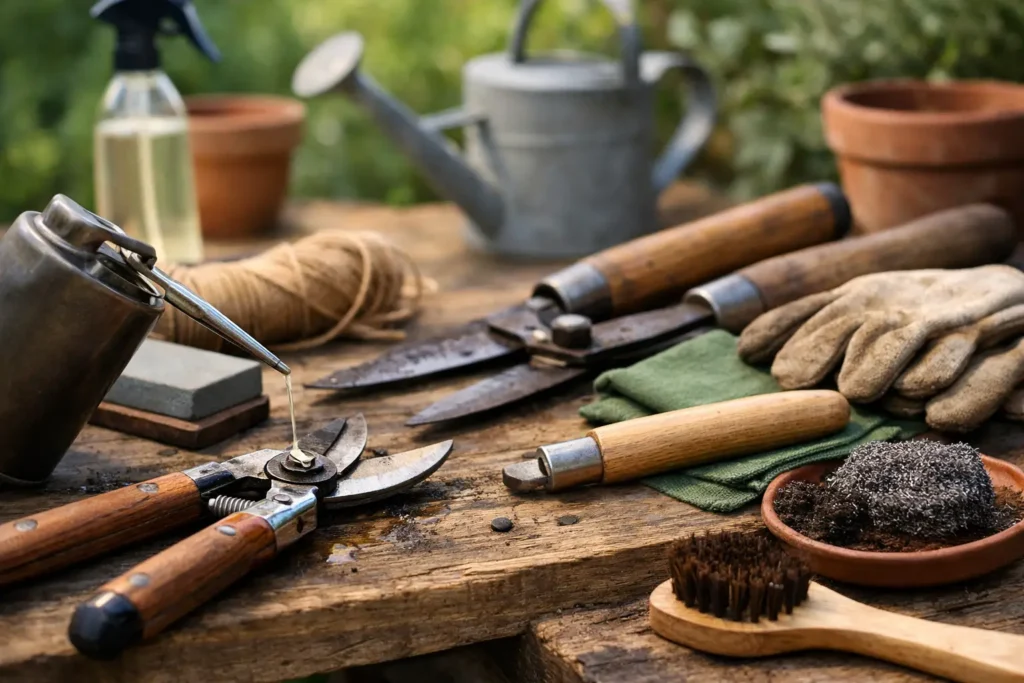
That sticky layer of sap on your pruners and the rust creeping onto your shovel are not just cosmetic problems. They make yard work slower, harder on your hands, and tougher on the tools you paid for. A good garden tool care guide helps you avoid that slow decline, so your gear stays safer, cleaner, and ready when Seattle weather finally gives you a dry weekend.
Most garden tools do not fail all at once. They get a little dull, a little loose, and a little rusty until using them feels frustrating. The upside is that regular care does not need to be complicated. A few minutes after use, a better storage setup, and timely sharpening can add years to the life of your tools.
Why garden tool care matters more than most people think
When a blade is dull or a handle is loose, the tool stops working with you and starts working against you. You use more force, your cuts get rougher, and jobs that should take twenty minutes drag on much longer. With pruners and loppers, dull edges can crush stems instead of making clean cuts, which is harder on plants and harder on your wrists.
There is also a safety angle. People often assume sharp tools are more dangerous, but neglected tools are usually the bigger problem. A dull edge can slip. A rusted joint can bind. A cracked handle can fail when you put weight on it. Good maintenance reduces surprises, and surprises are what cause accidents.
For homeowners, that means less hassle and fewer replacements. For landscapers and anyone maintaining multiple properties, it means better productivity and more predictable results. Tool care is not just about being tidy. It is about keeping essential equipment dependable.
A practical garden tool care guide for everyday use
The best routine is the one you will actually keep. For most hand tools, basic care comes down to four things: clean them, dry them, protect them, and sharpen them when needed. You do not need a workshop full of gear to do this well.
Clean tools before residue hardens
After using pruners, loppers, shears, trowels, hoes, or shovels, knock off soil and plant debris right away. Dirt holds moisture, and moisture leads to rust. Sap is another problem because it gums up moving parts and can keep blades from closing cleanly.
For light mess, a stiff brush or rag is enough. If the tool has sticky residue, warm water and mild soap usually handle it. Dry the tool fully before putting it away. Leaving it damp in a garage or shed is one of the fastest ways to start corrosion.
If you work in wet soil often, this matters even more. Seattle-area gardeners know that moisture has a way of hanging around. Even tools that look fine after a job can start developing surface rust if they are stored dirty and wet.
Dry and oil metal surfaces
Once the tool is clean, give the metal a light coat of oil. This is especially useful for blades, pivots, springs, and any bare steel surfaces. You do not need to soak the tool. A thin layer is enough to create a barrier against moisture.
Moving joints deserve a little extra attention. Pruners and loppers work best when the pivot opens and closes smoothly. If that joint feels stiff or squeaks, a drop of oil can make a noticeable difference. Just wipe off the excess so it does not attract dust and grit.
There is some room for preference here. Some people oil after every use, while others do it weekly during the busy season. If you garden often, more frequent light care usually works better than waiting for buildup and rust to become a bigger job.
Store tools where moisture cannot sit on them
Storage is where good intentions often fall apart. Even well-cleaned tools will deteriorate if they live on a damp floor or get tossed into a corner where water can collect. Hanging tools is ideal because it keeps edges protected, improves airflow, and makes it easier to spot problems before they get worse.
If hanging is not realistic, store tools off the ground. A dry shelf, bin, or wall rack works better than concrete. For hand tools, a simple tote or drawer organizer can prevent blades from banging against each other and losing their edge faster.
It also helps to store tools in the condition you want to find them. That sounds obvious, but it matters. If pruners are put away sticky and half-open, you are setting up your next job to start with frustration.
Sharpening is where performance comes back
Cleaning and oiling protect your tools, but sharpening is what restores their usefulness. This is the part people often put off too long. They keep using a blade that has gradually lost its edge, and by the time they notice, the tool already feels tiring and inefficient.
Which garden tools should be sharpened regularly
Pruners, loppers, hedge shears, hoes, shovels, and many other digging or cutting tools benefit from periodic sharpening. Not every tool needs a razor edge. A shovel, for example, does not need the same finish as pruning shears. But a defined, clean edge still helps it cut into soil and roots with less effort.
By contrast, precision cutting tools need more careful attention. Pruners and shears perform best when the edge angle is maintained properly and the blade surface stays even. Remove too much metal or sharpen the wrong side, and the tool may cut worse, not better.
That is the trade-off with do-it-yourself sharpening. It can work well for basic upkeep if you know the tool and use the right technique. But if a blade is nicked, badly worn, misaligned, or part of a bypass mechanism, professional sharpening often saves the tool from more damage.
Signs a tool needs sharpening, not just cleaning
Sometimes it is obvious. The blade tears instead of cutting cleanly. You have to squeeze harder than usual. The edge reflects light where it should look crisp and even. Other times the signs are subtler, like hand fatigue after a short task or stems that bend before they finally give way.
A dirty blade can mimic some of the same symptoms, so clean first. If the tool still drags, binds, or crushes, sharpening is likely the next step. For tools with moving parts, sharpness and adjustment often go together. A freshly sharpened pair of pruners will still perform poorly if the pivot is too loose or too tight.
Handles, hardware, and the parts people forget
A lot of tool care advice focuses only on metal edges, but handles matter too. Wood handles can dry out, crack, or splinter. Fiberglass and composite handles can loosen where they meet the head. Grips can wear down until the tool becomes uncomfortable to hold.
Check handles regularly for movement, especially on shovels, hoes, and rakes. A slight wobble rarely fixes itself. Tightening hardware early can prevent a more expensive repair later. Wood handles benefit from occasional conditioning, especially if they are stored in dry indoor heat for months and then exposed to wet outdoor conditions.
Springs, bolts, and pivot screws also deserve a quick look. If a pruner spring pops out easily or a pivot keeps backing off, performance will stay inconsistent no matter how sharp the blade is. Good maintenance is often less about one big fix and more about catching several small issues before they stack up.
When to handle it yourself and when to bring it in
There is nothing wrong with basic at-home maintenance. In fact, it is the best way to protect your investment between sharpenings. Cleaning after use, drying thoroughly, wiping on a little oil, and checking for loose hardware will solve a lot of common problems.
But some tools need a more experienced hand. If the edge has chips, the blade profile is uneven, the cutting action feels off, or the tool has been neglected for a long time, professional service can restore performance more accurately. That is especially true for tools you rely on often or tools that cost enough to justify proper care.
For busy households and working crews, convenience matters too. If a pile of dull garden tools has been sitting in the garage for months, getting them professionally sharpened is often faster than trying to relearn edge maintenance on a Saturday afternoon. Sharper Tools LLC helps Seattle-area customers keep those everyday tools in working shape without turning maintenance into another unfinished project.
Seasonal timing can help here. Early spring is a smart time to inspect, clean, and sharpen before heavy use starts. Late fall is just as useful for cleaning tools before storage, so rust and residue do not spend the winter settling in.
Good garden tool care is not about perfection. It is about making sure the tool in your hand does the job it was meant to do, every time you reach for it.