
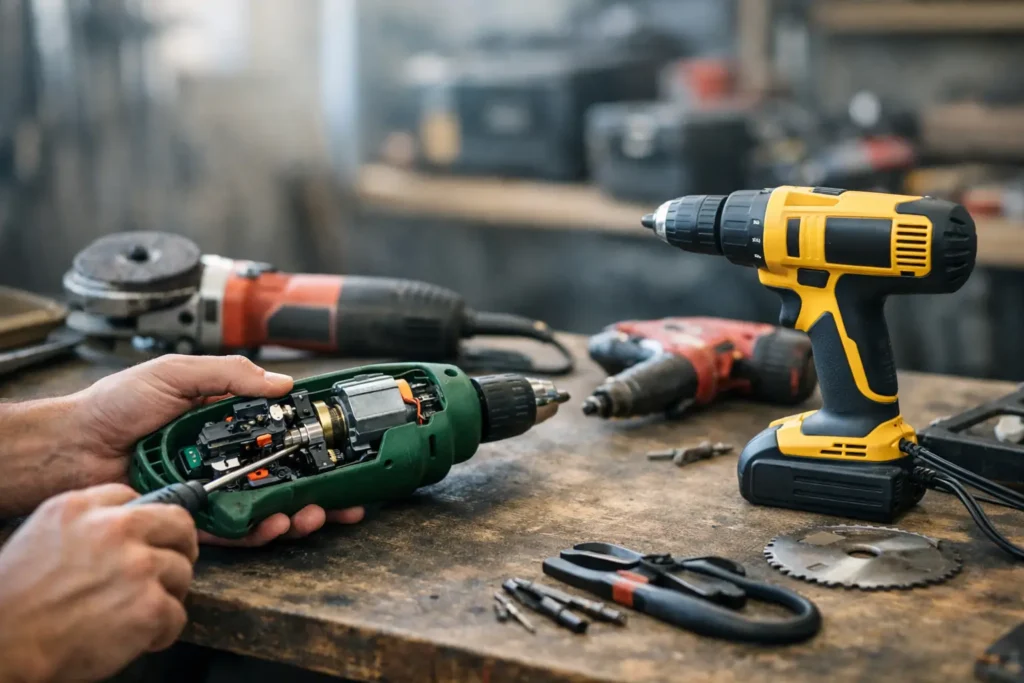
That drill that suddenly cuts out halfway through a project usually does not fail without warning. Maybe the cord has been kinked near the handle for months, the switch has felt loose, or the motor has been throwing more sparks than usual. Corded power tool repair often comes down to catching those signs early and knowing whether a practical fix will give you years more service or just buy you a few more weekends.
For homeowners, DIY users, and small crews, a broken corded tool is more than an annoyance. It can stall a kitchen update, interrupt yard work, or slow down paid work where time matters. The good news is that many corded tools fail in predictable ways. The harder part is deciding what is safe and worthwhile to repair.
When corded power tool repair makes sense
Corded tools earn their keep because they deliver steady power, have fewer battery-related issues, and can last a long time with basic care. That durability is exactly why repair is often worth considering. If the tool has a solid housing, a good motor, and a replacement part is easy to source, fixing it can be the better value.
Age matters, but not always in the way people think. A well-built older drill, grinder, or sander may be more repairable than a newer low-cost model with hard-to-find parts. Brand reputation also plays a role. Some manufacturers support common wear items like brushes, switches, cords, bearings, and gear cases for years. Others make replacement parts so expensive that repair stops making sense fast.
Usage history matters just as much. If a tool worked well until one obvious issue showed up, such as a cut cord or worn brushes, repair is usually straightforward. If it has seen heavy use, overheated repeatedly, and developed multiple symptoms, you may be looking at a deeper problem inside the motor or drivetrain.
The most common failures in corded power tool repair
A damaged power cord is one of the most frequent problems, especially near the plug or where the cord enters the tool. Repeated bending weakens the copper strands inside even when the outer jacket still looks mostly intact. A tool that powers on only when the cord is held at a certain angle is a classic sign.
Switches are another common failure point. Dust, vibration, and normal wear can all affect how a trigger or on-off switch behaves. Sometimes the tool will not start at all. Other times it starts inconsistently or continues running after the trigger action feels sticky.
Motor brushes wear down gradually and are often overlooked until performance drops. Many corded tools use carbon brushes that make electrical contact with the motor armature. As they wear, the tool may lose power, produce more visible sparking, or stop working entirely. In tools designed for brush replacement, this can be one of the simpler repairs.
Bearings and gears tend to show up as noise problems before total failure. Grinding sounds, excessive vibration, or a hot gear case can point to worn internal components. These repairs are more involved because labor and parts can add up quickly. A professional-grade tool may still be worth saving. A bargain tool often is not.
Then there is motor damage. A burned armature or field coil can happen after overload, blocked airflow, or years of use in dusty conditions. This is where corded power tool repair starts to become a cost-benefit decision rather than an automatic yes.
Safety comes first, especially with electrical faults
A corded tool is only useful if it is safe to hold and safe to plug in. That sounds obvious, but plenty of people keep using tools that tingle, spark excessively, or smell hot because they still kind of work. That is a bad bet.
If a housing is cracked near electrical components, if the cord insulation is damaged, or if the tool trips breakers repeatedly, stop using it until it is properly checked. Temporary fixes with tape, improvised splices, or forcing a loose plug to stay connected are not repairs. They are hazards.
There is also a difference between a part replacement and a diagnosis. Replacing a worn cord or brush may be manageable for someone with experience, but tracing intermittent power loss or motor shorts takes testing and judgment. The goal is not just to get the tool running again. The goal is to know it will run safely the next time you need it.
Fix it or replace it?
This is where practical thinking beats sentiment. If the repair cost is modest and the tool has years of useful life left, repair is usually the right move. If the estimate approaches the cost of a dependable replacement, it is time to step back.
A good rule of thumb is to weigh three things together: tool quality, repair complexity, and replacement cost. A professional-grade tool with a failed switch or cord is usually worth fixing. A low-cost homeowner model with motor damage, worn bearings, and a cracked housing usually is not.
Convenience matters too. If a replacement is easy to get and the failed tool has already been frustrating for a while, moving on may save time and hassle. On the other hand, if you already know and trust how a tool performs, a smart repair can keep a reliable piece of equipment in service and out of the landfill.
For many Seattle-area customers, that sustainability angle matters. Extending tool life when the repair is sound is simply practical. It reduces waste and gets more value from something you already own.
Signs your tool should be inspected soon
Some failures are obvious, but many show up gradually. If your corded tool is running hotter than usual, losing power under normal load, making new noises, or producing a burning smell, do not wait for a complete breakdown. Those symptoms often point to wear that is easier and cheaper to address early.
Intermittent performance is another red flag. Tools rarely heal themselves. If it only starts after tapping the housing, wiggling the cord, or pulling the trigger a few times, a component is on its way out.
Dust buildup also causes more trouble than people expect. Vents clogged with fine debris trap heat, and heat shortens the life of motors, switches, and insulation. Basic cleaning and storage habits can prevent a surprising number of repairs.
How to get more life from corded tools
The best repair bill is the one you avoid. That starts with handling the cord correctly. Pulling the tool by the cord, yanking the plug from the outlet, or wrapping the cord tightly around the body all put stress in the same spots that fail first.
Keep air vents clear and avoid pushing the tool harder than it was designed to work. If the motor is bogging down, backing off is better than forcing it through. Heat is one of the biggest reasons motors and switches fail early.
Storage matters more than people think. A dry shelf or cabinet beats a damp garage floor every time. Moisture, dust, and temperature swings are hard on electrical tools, especially during long periods of non-use.
If you use your tools regularly, occasional inspection is worth the effort. Look for cord wear, check the plug, listen for changes in sound, and pay attention to how the switch feels. Small issues stay small when they are caught early.
A practical way to think about corded power tool repair
Most people do not need a deep electrical background to make a good decision. Start with the obvious questions. Is the problem isolated and repairable? Is the tool worth saving based on build quality and performance? Will the repair leave you with a safe, dependable tool rather than a temporary workaround?
That mindset works whether you are maintaining a few household tools or keeping equipment ready for steady use. It is the same practical thinking behind sharpening and upkeep in general: take care of what you rely on, fix what is worth fixing, and do not ignore the warning signs until a small problem becomes a bigger one.
A good tool does not have to be new to be dependable. Sometimes it just needs the right repair at the right time.