
A lawn that suddenly looks ragged after mowing usually is not a grass problem. It is often a blade problem. If you are asking how often sharpen lawn mower blades, the short answer is about every 20 to 25 hours of mowing, or at least once per season for light use. But the better answer depends on your yard, your mowing habits, and what your blade hits along the way.
For many Seattle-area homeowners, that timing lands somewhere between one and three sharpenings during the growing season. If you mow a small, fairly clean lawn, you may get by with a preseason sharpening and one touch-up later on. If you mow a larger property, deal with sticks and debris, or cut often through damp grass, your blade will lose its edge faster.
How often sharpen lawn mower blades in real life
The 20 to 25 hour guideline is a solid baseline because it reflects actual wear, not just the calendar. A mower blade does not need to be razor sharp like a kitchen knife, but it does need a clean working edge. Once that edge rounds over or gets nicked, the mower starts tearing grass instead of cutting it cleanly.
That rough cut shows up quickly. Grass tips may look brown a day or two after mowing. The lawn can take on a dull, frayed appearance even when the mowing pattern is neat. You may also notice the mower working harder than usual, especially if the blade has become both dull and slightly unbalanced.
If your mowing season is long and active, checking the blade every month or so is a practical habit. You do not have to sharpen it every time you inspect it, but regular checks help you catch wear before it starts affecting the lawn.
What changes how often mower blades need sharpening
Not every yard wears down a blade at the same rate. A mower used on a smooth, debris-free lawn will keep its edge longer than one used on rough ground. That is why a simple once-a-year rule works for some people and falls short for others.
Yard size and mowing frequency
The more hours the mower runs, the faster the edge wears. A homeowner with a small city lot may only rack up a few mowing hours each month. Someone maintaining a large yard, rental property, or several areas around one home can hit that 20 to 25 hour mark much sooner.
Frequent mowing can be easier on the blade if you are only trimming a little each time, but total hours still matter. More cutting time means more contact with grass, dust, and occasional grit.
Debris, dirt, and hidden impacts
Blade edges dull fastest when they strike things other than grass. Small sticks, pine cones, exposed roots, rocks, and compacted soil all take a toll. Even sandy or gritty conditions can wear an edge down faster than expected.
This is one reason two neighbors with similar lawns can have very different sharpening schedules. One yard may be clean and level. The other may hide more debris, or have bare patches where the blade brushes dirt during each pass.
Grass conditions
Wet grass is not exactly harder on the blade edge, but it can make mowing less efficient and cause buildup under the deck. That buildup affects cut quality and puts extra strain on the mower. Tougher late-season growth and neglected, overgrown patches can also make a dull blade more obvious.
Blade material and previous condition
Some blades hold an edge longer than others, but even a good blade loses performance if it has been sharpened poorly, overheated during grinding, or left with deep nicks. A blade that is bent or worn thin is a different issue entirely. At that point, sharpening may not be the best fix.
Signs your lawn mower blade needs sharpening sooner
You do not need to track mowing hours perfectly if you know what to watch for. Your lawn often tells you before the blade does.
Brown or white frayed tips after mowing are one of the clearest signs. Instead of a crisp cut, the grass looks torn. That damage can make the lawn more vulnerable to stress and disease, especially during hot or dry periods.
Uneven cutting is another clue. If the mower leaves behind random stragglers or gives the lawn a rough finish even after overlapping passes, the blade may be too dull to cut cleanly. You might also feel more vibration than usual, which can point to a nicked or unbalanced blade.
And then there is the simple visual check. If you remove the blade and see a rounded edge, chips, dents, or shiny impact spots, it is time for attention.
Why sharp mower blades matter more than people think
A sharp lawn mower blade is not about chasing a perfect stripe pattern. It directly affects lawn health, mower performance, and how much work you create for yourself later.
Cleanly cut grass recovers faster and looks better right away. Torn grass loses moisture faster and turns brown at the tips, which makes the whole yard look tired even when it has been freshly mowed. Over time, repeated tearing can add stress to the lawn.
Sharp blades also reduce strain on the mower. The engine does not have to work as hard to force a dull edge through grass. That can help with fuel efficiency, battery performance on cordless models, and general wear on the machine.
There is also a safety angle. A damaged or badly worn blade can create vibration that loosens hardware and makes mowing less predictable. Sharpening is part of regular maintenance, but so is recognizing when a blade should be replaced rather than touched up again.
Can you sharpen too often?
Yes, if too much metal is removed each time. The goal is not to grind the blade down to a knife edge after every mow. A mower blade needs a durable cutting edge, not an ultra-thin one. Over-sharpening shortens blade life and can weaken the metal.
That is why condition matters more than habit. A blade that still has a solid edge and no damage may only need a light touch-up. A heavily nicked blade may need more work, and sometimes replacement makes more sense than repeated grinding.
Balance matters too. After sharpening, the blade should remain evenly balanced. An unbalanced blade can cause vibration, uneven wear, and extra stress on the mower spindle. This is where professional sharpening can save trouble, especially if you would rather not guess.
DIY vs professional sharpening
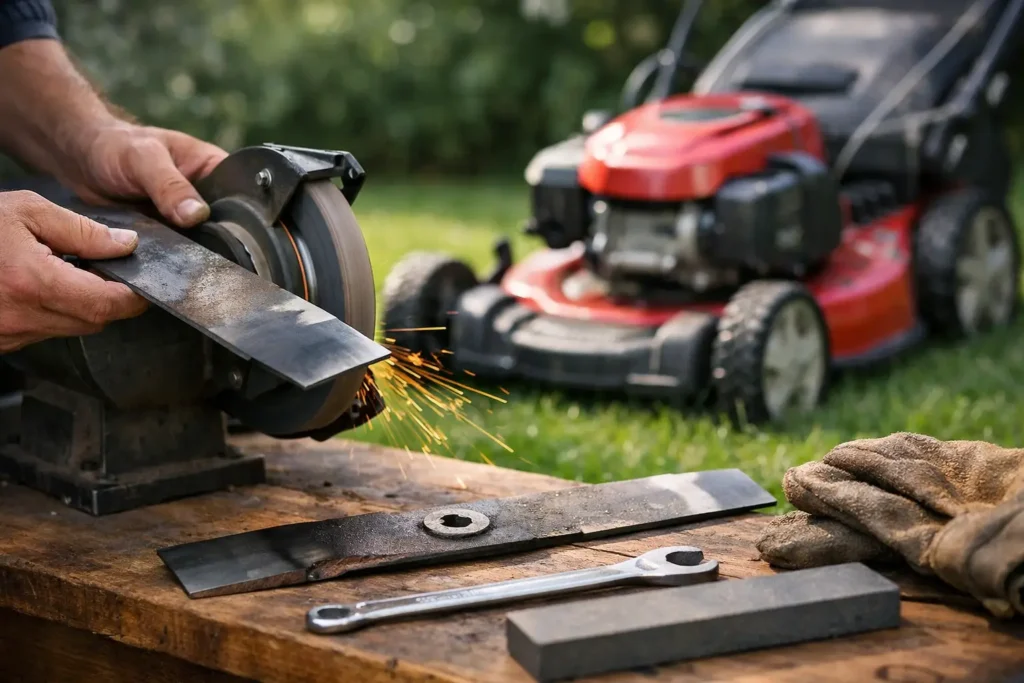
Some homeowners prefer to sharpen mower blades themselves, and that can work well if you have the right tools, know the correct angle, and can check balance afterward. The process also means safely removing the blade, cleaning it, grinding or filing it evenly, and reinstalling it properly.
The trade-off is time and consistency. A blade that looks sharp but is uneven or overheated during sharpening may not perform the way it should. For people who would rather keep yard work simple, having the blade sharpened professionally is often the more practical option.
That is especially true if the blade has impact damage, if you are not sure whether it is still serviceable, or if you want the convenience of dropping it off and getting it back ready to work. For local homeowners who already rely on Sharper Tools for household and garden edge maintenance, mower blade sharpening fits that same straightforward approach – keep the tool working well, avoid replacing it too soon, and make the next job easier.
A practical sharpening schedule to follow
If you want an easy rule, start each mowing season with a sharp blade. Then plan another sharpening after roughly 20 to 25 hours of use. If your lawn is small and clean, that may be enough for the year. If you mow often, cover a larger property, or regularly hit debris, expect to sharpen more often.
A midseason check is a smart habit even if you are not sure how many hours you have logged. Look at the lawn after mowing. If the cut quality drops, do not wait for the season to end.
Commercial users and anyone mowing multiple properties should be even more proactive. Once blades go dull, the drop in cut quality and the added wear on equipment can cost more time than the sharpening itself.
The best schedule is the one that matches your actual use, not a random date on the calendar. If the grass looks cleanly cut and the mower runs smoothly, you are probably in good shape. If the lawn looks torn up after a fresh mow, the blade is asking for attention. Staying a little ahead of that wear keeps yard work easier and the results noticeably better.