
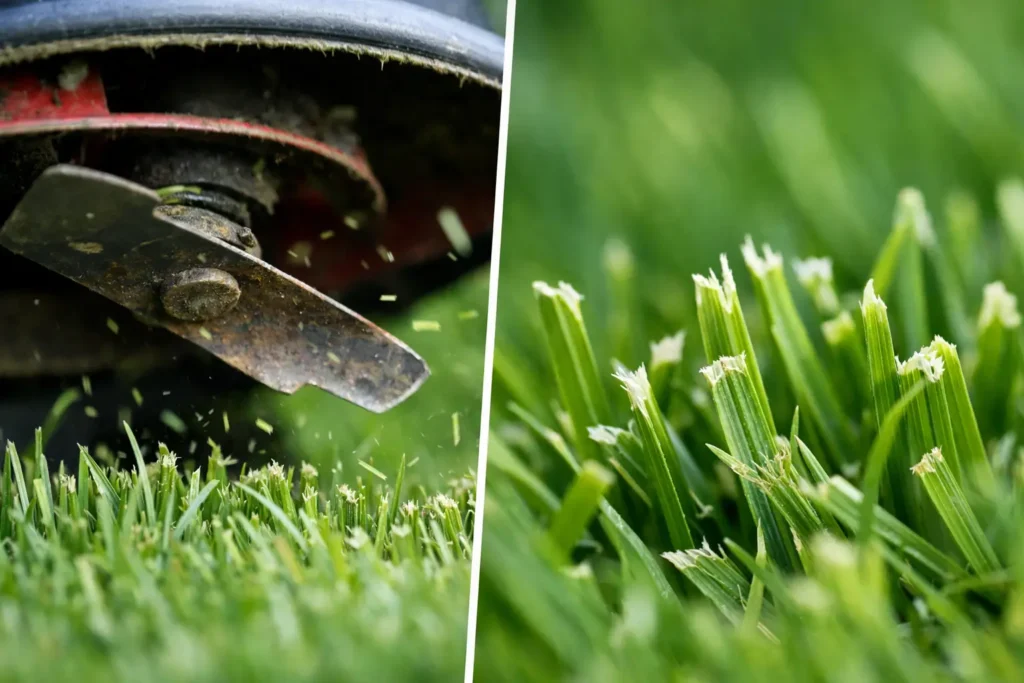
If your lawn looks whitish, ragged, or frayed a day after mowing, the question usually is not whether the grass is unhealthy. It is why do mower blades tear grass when they are supposed to leave a clean cut. In most cases, the problem starts with blade condition, but mowing height, grass moisture, speed, and even the type of grass in your yard can make the damage worse.
A healthy mower blade slices. A struggling mower blade rips. That difference matters more than many homeowners realize, because grass is not just being shortened when you mow. Each blade of grass is being wounded. A clean cut heals quickly and keeps the lawn looking green and even. A torn cut leaves a shredded tip that dries out, turns brown, and can make the whole yard look stressed even when the roots are fine.
Why do mower blades tear grass instead of cutting it?
The most common reason is a dull edge. Mower blades do not need to feel razor sharp like a kitchen knife, but they do need a clean, well-shaped edge. As that edge wears down from normal use, it stops slicing efficiently and starts battering the grass. You end up with tips that look split or chewed rather than neatly clipped.
Seattle-area lawns can be especially prone to this issue because moisture changes the mowing conditions. Wet or damp grass bends instead of standing upright, which makes it harder for the blade to make a clean pass. If you mow too soon after rain or early morning dew, even a decent blade can leave rougher cuts than usual.
Blade damage is another overlooked cause. If the mower hits small rocks, roots, edging, or hidden debris, the edge can develop nicks and flat spots. At that point, part of the blade may still cut reasonably well while another section tears. That can leave your lawn looking uneven, with some areas crisp and others ragged.
There is also the matter of airflow. Mower blades are designed not only to cut but also to create lift. When the blade shape is worn down or bent, the grass may not stand up properly before the cut. Instead of being lifted and sliced, it gets pushed over and torn. That is one reason a blade can perform poorly even if it does not look completely dull at first glance.
What torn grass looks like
A torn lawn usually tells on itself within a day or two. Freshly mowed grass should look evenly trimmed with green tips. When blades are tearing, the ends of the grass turn tan, white, or brown. Up close, the tips often appear frayed, split, or shredded.
Many people mistake this for drought stress, disease, or fertilizer burn. Sometimes those issues are present too, but torn grass has a distinct look. The damage shows up mostly at the top of the blade, not throughout the whole plant. If your lawn looked green before mowing and rough right after, your mower is the first thing to check.
This is also why a lawn can seem unhealthy even when watering and feeding are on track. The roots may be fine, but the surface appearance suffers because every mowing session leaves thousands of damaged tips behind.
Why torn grass is more than a cosmetic problem
The visual issue is what gets noticed first, but torn grass can create bigger lawn health problems over time. A ragged cut exposes more surface area at the tip of the grass blade. That means more moisture loss, slower recovery, and more stress during hot or dry periods.
Those torn ends can also make the lawn more vulnerable to disease. Grass that has been cleanly cut can recover faster. Grass that has been shredded has to spend more energy repairing itself. On a thick, damp lawn, especially in periods of frequent rain, that extra stress can add up.
It also affects consistency. When the mower is tearing instead of cutting, the lawn tends to look uneven even if your mowing pattern is straight. That often leads homeowners to mow more often or cut lower trying to fix the appearance, which can make things worse.
Dull blades are the main cause, but not the only one
A lot of lawn problems get blamed on dull blades, and that is fair because they are often the main culprit. Still, a sharp blade is not a magic fix for every mowing issue.
Cutting too much grass at once can cause tearing too. If the lawn gets overgrown and you remove a large portion in one pass, the mower has to work harder and the grass is more likely to bend, clump, and tear. That is especially true in thick spring growth.
Ground speed matters as well. When you push the mower too fast, the blade may not have enough time to cut each section cleanly. Instead, the deck runs over grass that is not being lifted and cut properly. The result can look similar to dull-blade damage.
Moisture plays a big part. Wet grass clumps, sticks inside the deck, and resists a clean cut. If the underside of the mower deck is caked with old clippings, airflow drops and cutting performance drops with it. In that situation, even a freshly sharpened blade may leave a rough finish.
Then there is blade balance and installation. A blade that has been sharpened poorly, worn unevenly, or mounted incorrectly can create vibration and an inconsistent cut. That kind of issue is less common than plain dullness, but it is worth paying attention to if your mower still cuts badly after sharpening.
How often should mower blades be sharpened?
There is no perfect universal schedule because usage varies. A small city lawn mowed regularly puts different wear on a blade than a larger property with sticks, seed heads, and rough ground. As a general rule, many homeowners benefit from sharpening at least once or twice per season, but heavy use can call for more frequent service.
The better question is what your lawn is telling you. If the grass tips look frayed, if the mower seems to work harder than usual, or if the finish suddenly looks rough, the blade likely needs attention. Waiting too long does not just affect appearance. It can also put more strain on the mower itself.
For customers who want practical upkeep without guesswork, professional sharpening helps because the blade is not only sharpened but also checked for edge condition, shape, and balance. That is often the difference between a blade that is merely less dull and one that is actually ready to cut properly again.
Why do mower blades tear grass even after sharpening?
If you sharpened the blade and still see torn tips, something else is probably contributing. The edge may be sharp, but the blade could be nicked, bent, or worn past its useful shape. A blade can only be restored so many times before the metal profile no longer performs as intended.
Mowing conditions may also be the issue. If the grass is wet, too tall, or being cut too short, the lawn can still come away looking rough. Sharpening improves the blade, but it does not erase poor timing or mowing habits.
Deck buildup is another common reason. Old, packed clippings under the deck disrupt airflow and keep grass from standing tall for the cut. Cleaning the deck and slowing down can make a noticeable difference, especially on thicker lawns.
When sharpening is worth it and when replacement makes more sense
Most mower blades can be sharpened multiple times, and for many homeowners that is the most cost-effective option. If the blade is structurally sound and simply dull, sharpening brings back the cutting edge and helps the lawn recover its cleaner look.
Replacement makes more sense when the blade is deeply cracked, badly bent, heavily pitted with rust, or worn down enough that the original shape is compromised. Trying to keep an exhausted blade in service can waste time and still leave you with a poor cut.
This is where a local sharpening service can save frustration. Instead of guessing whether the blade just needs an edge or is past its prime, you get a practical answer based on its actual condition. For busy homeowners and lawn crews, that kind of straightforward assessment matters.
At Sharper Tools, that same practical mindset applies to mower blade sharpening just as much as it does to kitchen knives or garden tools. The goal is simple – keep the tools you already own working the way they should.
A better-looking lawn usually starts with a better edge
If your lawn keeps looking brown at the tips right after mowing, do not assume the grass itself is failing. Most of the time, the mower is telling you it needs attention. A clean-cut lawn does not come from mowing more aggressively. It comes from the right edge, the right conditions, and a little less wear-and-tear on every pass.
A mower blade should leave grass trimmed, not tattered. When you fix that one detail, the whole yard tends to look healthier, greener, and easier to maintain.