
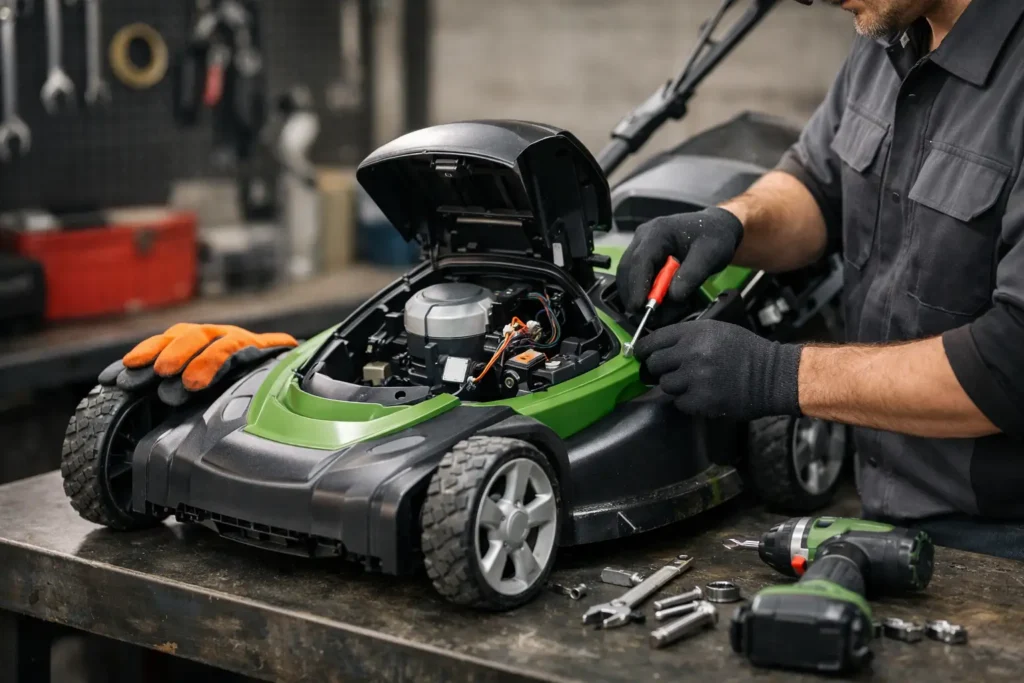
That moment when your mower stops halfway through the yard usually happens when the grass is already too long and the weather is finally cooperating. Electric lawn mower repair matters most right then – when you need a practical fix, not a long lesson in small engine theory. The good news is that many electric mower problems are straightforward once you know what to check first.
For Seattle-area homeowners, electric mowers make sense. They are quieter, easier to store, and generally lower-maintenance than gas models. But lower maintenance does not mean no maintenance. A dull blade, a damaged cord, a weak battery, or a clogged deck can turn a simple Saturday chore into a frustrating stop-and-start job.
Electric lawn mower repair starts with the obvious
Most mower failures are not mysterious. They usually come down to power, blade condition, or blocked airflow. Before assuming the motor is done, slow down and look at the basics.
If you have a corded mower, inspect the extension cord and the mower’s power connection first. A loose plug, worn insulation, or a partially cut cord can interrupt power or create a safety problem. If the mower starts and stops when the cord shifts, that is a clue. A damaged cord should be replaced, not taped up and trusted for another season.
If you have a battery model, check the battery charge, contacts, and temperature. A battery that sat through a cold winter in the garage may not hold a charge the way it used to. Dirty terminals can also keep the mower from pulling consistent power. Sometimes the issue is not the mower at all – it is the battery nearing the end of its useful life.
Then look underneath. With the mower fully disconnected from power, tip it carefully and inspect the blade area. Wet grass buildup, wrapped debris, and packed clippings can stop the blade from turning freely. Electric mowers rely on efficiency. A little drag can make a big difference.
When the mower runs but cuts badly
This is where repair and maintenance overlap. A mower that powers on but leaves ragged, uneven grass may not need electrical work. It may just need attention where it counts most – the blade.
A dull mower blade tears grass instead of cutting it cleanly. That makes your lawn look rough and can stress the grass, especially during warmer, drier stretches. Many people assume the mower motor is getting weak when the real problem is a blade that has lost its edge or gone slightly out of balance.
Blade condition also affects how hard the mower has to work. A sharp, balanced blade cuts efficiently and puts less strain on the motor and battery. A worn blade can lead to slower cutting, shorter runtime, and more overheating. This is one reason electric lawn mower repair is not always about replacing parts. Sometimes the smartest repair is restoring the cutting edge and getting the machine back to doing less work for the same result.
For local homeowners, this is often the best place to start. Professional blade sharpening is usually far more cost-effective than replacing a mower that still has plenty of life left in it.
Common signs something needs repair
Electric mowers tend to give warnings before they fully quit. If you catch those signs early, repairs are usually simpler and cheaper.
A mower that struggles in normal grass, shuts off after a few minutes, vibrates more than usual, or leaves strips uncut is telling you something. Excess vibration can point to a bent or unbalanced blade. Repeated shutdowns may indicate overheating from clogged vents, packed grass, or an overworked motor. Weak cutting performance often comes back to the blade first, then battery health, then motor wear.
There is some overlap here, and that is where people can waste money. Replacing a battery will not fix a damaged blade. Sharpening a blade will not solve a failing switch or worn motor bearings. The trick is matching the symptom to the most likely cause instead of guessing.
If the mower will not start
Start simple. Confirm the outlet works for corded models, and test with a different extension cord rated for outdoor use if needed. On battery units, try a fully charged battery that you know is working. Check safety handles and start switches too. Many electric mowers will not power on unless the handlebar safety system is fully engaged.
If those checks do not solve it, the issue may be in the switch assembly, internal wiring, or motor. At that point, repair becomes more technical. Some homeowners are comfortable opening housings and testing components. Many are better off having the unit looked at before replacing random parts.
If the mower starts but bogs down
Heavy grass can overwhelm any mower, but electric models are especially sensitive to cutting conditions. If the grass is damp, overgrown, or packed under the deck, the mower may bog down even if nothing is technically broken.
That said, a sharp blade makes a major difference. So does cleaning the deck after use. If bogging happens in light, dry grass, then battery output, motor strain, or blade drag become more likely suspects.
What you can safely do yourself
Some basic mower care is realistic for most homeowners. Cleaning the underside of the deck, checking for visible debris, inspecting the cord or battery contacts, and making sure the blade is not obviously damaged are all reasonable steps.
Blade removal is also manageable for some people, but only if the mower is disconnected from all power and you have the correct tools. The important part is not just getting the blade off. It is reinstalling it correctly and making sure it is sharpened evenly and balanced. An improperly sharpened blade can create vibration, reduce cut quality, and wear on the mower faster.
That is where a local sharpening service can save time and avoid repeat problems. At Sharper Tools, many customers are not looking for a lecture – they just want the blade handled properly so the mower works the way it should.
When electric lawn mower repair is worth it
Not every mower deserves a full repair bill. The answer depends on the age of the machine, the brand, replacement part availability, and the actual failure.
If the problem is a dull blade, moderate buildup, a worn cord, or a replaceable battery, repair is usually easy to justify. If the mower has a failing motor, cracked deck, and discontinued parts, replacement may make more sense. There is no single rule here.
A good practical test is this: if a modest repair will give you another couple of reliable seasons, it is often worth doing. If the unit has multiple issues and has already become unpredictable, putting money into it may only delay the bigger decision.
This is also where maintenance history matters. A mower that has had regular blade care and basic cleaning usually ages better than one that has been run with a dull blade through wet grass for years.
Blade care is the repair people skip
Electric mower owners often focus on batteries and switches because those feel more technical. But blade care is the maintenance step that has the biggest effect on performance.
A sharp blade gives you a cleaner cut, reduces stress on the machine, and helps the lawn recover faster after mowing. A balanced blade matters just as much. If one side is heavier, the mower can shake, wear unevenly, and feel rough in use. That extra vibration is not just annoying. Over time, it can contribute to loosening hardware and added wear on the machine.
Professional sharpening solves two problems at once – restoring the edge and preserving balance. That is hard to match with quick garage sharpening unless you already have the right setup and know what to watch for.
A practical approach for busy homeowners
Most people do not want to become mower repair experts. They want the lawn cut cleanly, the equipment to start when needed, and the fix to be worth the money. That usually means separating the simple issues from the expensive ones.
Start with power, cleanliness, and blade condition. If the mower still performs poorly after that, then it is time to look deeper at battery health, switches, or the motor itself. And if the blade has not been sharpened in a season or two, handle that before assuming the whole machine is wearing out.
Electric mowers are convenient because they cut out a lot of gas-engine maintenance. But they still depend on one basic truth: the cutting edge has to be right. When that part is ignored, the whole mower seems worse than it really is.
If your mower is underperforming, start with the part that does the cutting. A well-sharpened blade often turns an unreliable mower back into a useful one, and that is the kind of repair that actually feels worth doing.