
A lawn that looks shredded instead of neatly cut usually points to one thing – the blade is no longer doing its job. If you are wondering how to fix dull mower blades, the good news is that the problem is usually manageable. The less good news is that mowing with a dull blade for too long can stress your grass, leave brown tips across the yard, and make the mower work harder than it should.
For most homeowners, the real question is not just whether a blade is dull. It is whether it needs sharpening, balancing, or full replacement. That distinction matters because a blade that is merely worn can often be restored, while a blade that is bent, cracked, or ground down too far is no longer worth saving.
How to fix dull mower blades without guesswork
The quickest way to tell what you are dealing with is to inspect the cut and inspect the blade. If the lawn looks torn rather than sliced cleanly, and if the blade edge feels rounded instead of crisp, sharpening is usually the next step. If you see chips, deep nicks, major rust, or any sign of a crack, replacement is the safer move.
Start by disconnecting the spark plug or power source before touching the underside of the mower. That one step is non-negotiable. Even a small push mower can cause serious injury if the blade moves unexpectedly while you are working.
Once the mower is safe to handle, tip it carefully according to the manufacturer guidelines. Remove the blade and note its orientation so it goes back on the same way. A quick phone photo helps more than people expect.
At this point, clean the blade thoroughly. Grass buildup can hide damage, and it also makes sharpening less precise. A wire brush or stiff scrub pad is usually enough to clear off debris and expose the actual metal edge.
Sharpen or replace? It depends on blade condition
Not every dull blade should be sharpened again. That is one of the most common mistakes homeowners make. They keep grinding the same blade season after season until there is not enough metal left to hold a proper edge.
A blade is usually a good candidate for sharpening if the edge is dull but structurally sound. Light wear, minor rounding, and small surface rust are normal. A blade should usually be replaced if it is bent, cracked, heavily pitted, or missing chunks from impact with rocks, roots, or hidden yard debris.
There is also a middle ground. Some blades have moderate nicks that can be ground out, but doing that removes more material and may shorten the life of the blade. If the blade is already thin, that repair may not be worth it. This is where professional sharpening can save time because an experienced eye can tell quickly whether the blade is still serviceable.
How to sharpen a mower blade the right way
If the blade is worth saving, sharpening is straightforward when done carefully. The goal is not a razor edge. Mower blades do not need knife-level sharpness. They need a clean, even bevel that cuts grass efficiently without becoming fragile.
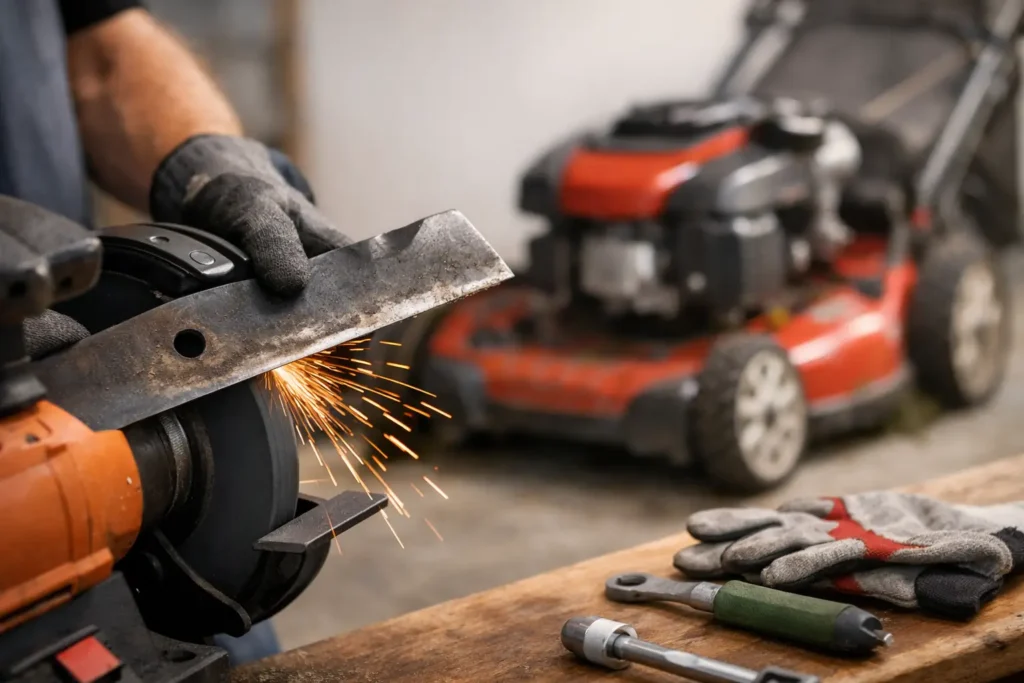
Use a file, bench grinder, or angle grinder, depending on your comfort level and tools. A hand file gives you the most control and removes metal slowly, which is helpful if you are new to this. Power tools are faster, but they can overheat the edge or remove too much material if you rush.
Follow the existing bevel on the cutting edge rather than creating a brand-new angle. Most mower blades already have the correct geometry built in. Work from the top side of the cutting edge outward, using smooth passes and even pressure. Focus on restoring the edge evenly on both ends of the blade.
You are looking for a clean edge, not a polished one. If the metal turns blue from heat, it has gotten too hot, which can affect hardness. That is another reason many homeowners prefer filing or light grinding instead of aggressive grinding.
Why balance matters after sharpening
A freshly sharpened blade that is out of balance can cause vibration, uneven cutting, and extra wear on mower bearings and engine components. This is the part people skip, and it often shows up later as a mower that suddenly feels rougher than before.
After sharpening, check the balance with a blade balancer or a simple nail mounted horizontally. If one side dips lower, that side is heavier and needs a bit more material removed. Take off small amounts and test again. It does not take much.
Balance is especially important if one side had more damage than the other. Even a good-looking edge can create problems if the weight is uneven.
Reinstalling the blade safely
Once the blade is sharp and balanced, reinstall it in the correct orientation. This sounds obvious, but it is a very common source of trouble. If the blade goes on upside down, the mower will not cut properly no matter how sharp it is.
Tighten the fastener to the manufacturer specification if you have it. Too loose and the blade can shift. Too tight and you risk damage to the bolt or mounting hardware. If you do not have a torque spec, check the owner manual before guessing.
After reinstalling, reconnect the spark plug or power source and test the mower on a small section of lawn. A clean cut with less tearing is the sign that the fix worked.
Signs your mower blade needs professional help
Some blade issues are simple garage jobs. Others are better handled by a sharpening service, especially if you want the blade restored correctly without trial and error.
Professional service makes sense when the blade has multiple deep nicks, the mower is vibrating, the blade has been sharpened unevenly in the past, or you simply do not want to deal with removal and grinding. It is also a practical choice if you maintain multiple mowers, care for a larger property, or want a reliable edge before peak growing season starts.
For Seattle-area homeowners and landscaping customers, convenience matters as much as edge quality. That is where a local service like Sharper Tools can be useful – especially when pickup and drop-off save you from fitting one more errand into the week.
How often to sharpen mower blades
There is no perfect universal schedule because grass conditions vary. A mower used on a small, clean suburban lawn may go much longer between sharpenings than one used on rough ground with sticks, pine cones, and hidden gravel.
A good rule of thumb is to inspect the blade every 20 to 25 mowing hours. Many homeowners end up sharpening once or twice a season. If your lawn starts showing frayed brown tips after mowing, do not wait for the calendar. Let the cut quality guide you.
Wet grass, sandy soil, and debris-heavy yards wear edges faster. So does mowing after construction or landscaping work, when extra grit tends to end up in the lawn.
Preventing dull mower blades in the first place
Keeping a blade sharp is easier than bringing a neglected blade back from rough shape. The simplest habit is to check the lawn before mowing. Picking up sticks, rocks, and toys takes a minute and can prevent edge damage that is much harder to fix later.
It also helps to clean the mower deck and blade area regularly. Built-up grass traps moisture, encourages rust, and makes inspections less accurate. At the end of the season, remove the blade, clean it, and store the mower in a dry place if possible.
If you use your mower heavily, keeping a second sharpened blade on hand is practical. That way, when one gets dull, you can swap it out and keep working instead of delaying the job. For homeowners, that saves time. For lawn-care professionals, it keeps the schedule moving.
When replacement is the smarter move
Sometimes the cheapest-looking option is not the best value. If a blade has been sharpened repeatedly, is badly worn, or cannot be balanced properly, replacement usually makes more sense than trying to stretch one more season out of it.
A fresh blade can improve cut quality immediately, and in some cases it reduces strain on the mower itself. The trade-off is cost, but replacing a compromised blade is still cheaper than dealing with damage caused by vibration, poor cutting, or a failed blade in use.
If you are unsure whether your blade can be restored, do not force the decision. A quick inspection by someone who sharpens tools every day can tell you whether the blade needs a tune-up or retirement.
A mower should leave your lawn looking clean, not chewed up. When the blade is in good shape, the whole job gets easier – on the grass, on the machine, and on you.