A prep cook reaches for a chef knife at 4 pm and needs it sharp right now, not next Tuesday. That is where the knife exchange service vs sharpening question gets real. For some kitchens, having a ready-to-use replacement knife on a fixed schedule makes perfect sense. For others, keeping their own knives and having them professionally sharpened delivers better value, better feel, and better long-term results.
The right choice depends on how you use your knives, how much downtime you can tolerate, and whether consistency matters more than keeping a specific blade in hand. If you are a restaurant, caterer, or even a busy household that relies on a favorite knife every day, the differences are worth understanding before you commit.
Knife exchange service vs sharpening: what is the difference?
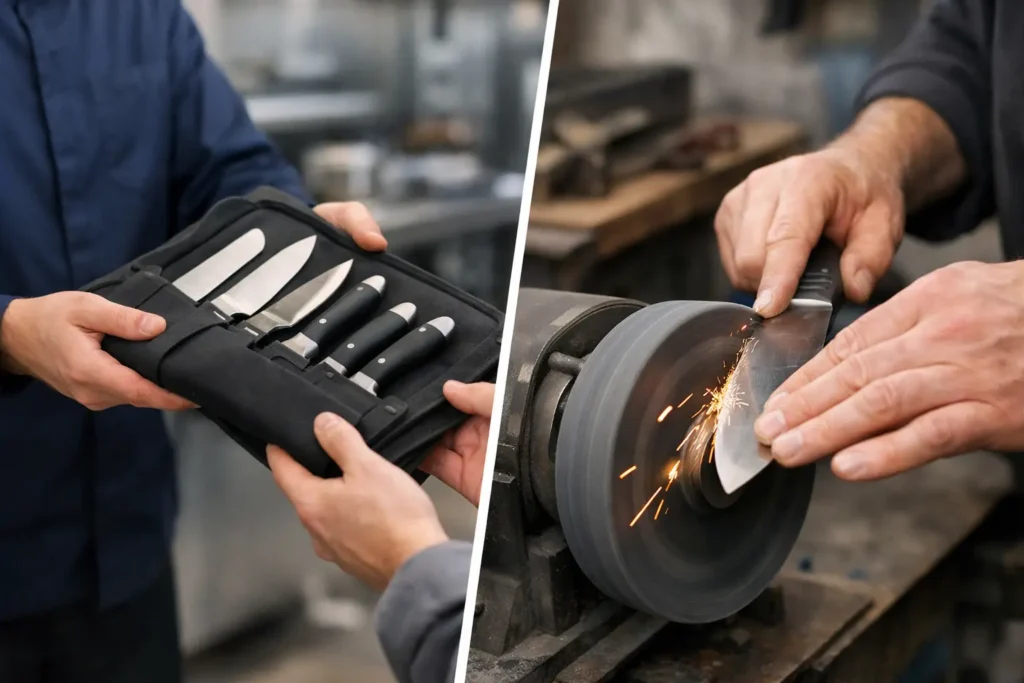
A knife exchange service gives you sharpened replacement knives on a route or schedule. Instead of sending your own knives out and waiting for them to come back, you swap dull knives for sharp ones that are already prepared. In a commercial setting, this keeps work moving and reduces interruptions.
Traditional sharpening means you keep your own knives. A sharpening service restores the edge on the actual tools you already own, whether that is a home kitchen set, restaurant prep knives, scissors, garden tools, or mower blades. You get back the same tool, just performing the way it should.
That distinction matters more than it may seem. With exchange, the priority is operational continuity. With sharpening, the priority is preserving the tool you chose, paid for, and already trust.
When a knife exchange service makes more sense
If you run a busy kitchen, knife exchange can solve a practical problem fast. Staff do not have to stop and work around a dull edge. There is no need to label, track, or wait on individual knives. Sharp tools are simply available when needed.
This is especially useful for restaurants and catering operations where volume is high and time is tight. If knives are being used hard every day by multiple people, the convenience can outweigh the downside of not keeping a specific blade. A knife swap program also makes budgeting easier because service is often structured around recurring pickup and replacement rather than one-off sharpening appointments.
For some operators, that predictability is the whole point. You are not trying to build a collection of personal knives for each station. You are trying to keep prep moving, reduce slowdowns, and avoid the safety issues that come with forcing a dull blade through onions, tomatoes, or proteins.
That is why services like Knife Swap & Go appeal to commercial kitchens. They fit the rhythm of the business.
When sharpening is the better option
Sharpening is usually the better fit when the knife itself matters to you. That could mean a cook who prefers a certain handle shape, a homeowner who loves one reliable chef knife, or a kitchen that has invested in better steel and wants to protect that investment.
A good sharpening service brings the edge back without turning the knife into a generic replacement. You keep the balance, feel, and familiarity of your own tool. Over time, that can matter a lot. Many people cook better and more safely with knives they know well.
Sharpening also tends to be the smarter route for households and small teams that do not need a constant rotation of replacement knives. If you can plan around a pickup and drop-off window, or if your local service offers convenient turnaround, there is no strong reason to give up tools you already like.
There is also a broader value question. Professional sharpening can extend the life of your knives and reduce waste. Instead of replacing blades or cycling through lower-quality exchange inventory, you maintain what you already own.
Cost is not just about the invoice
On paper, the knife exchange service vs sharpening comparison often starts with price. But the actual cost is not always obvious.
Exchange services can look efficient because they bundle convenience into the model. You are paying for reliability, scheduling, and no downtime. In a commercial kitchen, that can be worth every dollar if one dull knife slows down prep or frustrates staff during service.
Sharpening may cost less over time for households, independent cooks, and businesses that own good knives and want to keep them. If the blades are well made, maintaining them properly often delivers better long-term value than repeatedly relying on replacement inventory.
The bigger point is that cost should be measured against use. A home cook slicing vegetables for dinner a few nights a week has very different needs from a catering crew breaking down cases of produce and protein every day.
Quality and consistency are where opinions split
This is the part people usually care about most. Does the knife feel right when you use it?
With exchange services, quality depends on the condition and consistency of the replacement knives. Some programs do a solid job of keeping blades sharp enough for commercial use. But even then, the knife you get this week may not feel exactly like the one you used last week. For kitchens focused on throughput, that may be fine. For cooks who care about precision and comfort, it can be a drawback.
With sharpening, the outcome depends on the skill of the sharpener and the condition of your blade. When done well, the result is more personal and often more satisfying. Your knife comes back sharper, cleaner, and better suited to the way you already work.
This is one reason local sharpening matters. A knowledgeable service can evaluate the steel, edge condition, and intended use instead of treating every knife the same way.
Convenience looks different at home and at work
For commercial customers, convenience usually means no interruptions. Exchange wins that category easily. You do not have to pull knives out of service and wait. You just swap and keep moving.
For homeowners and small local businesses, convenience often means something else. It means easy pickup and drop-off, clear communication, reliable turnaround, and confidence that your own tools are coming back in better shape. That kind of convenience makes sharpening very competitive, especially when the provider is local and understands the area.
If you are in Seattle and balancing work, family, meals, and everything else, practical logistics matter. A sharpening service that fits into real life can be more useful than a one-size-fits-all system.
Which option is better for restaurants?
Restaurants should think first about workflow. If your knives are shared, used hard, and expected to be ready at all times, exchange can simplify operations. It reduces friction and helps standardize availability.
But not every restaurant is the same. Chef-driven kitchens, smaller operations, and teams that buy higher-quality knives may prefer sharpening because it preserves performance and familiarity. If key staff members bring or prefer specific knives, exchange may feel like a compromise.
A mixed approach can also work. Some kitchens use exchange for general prep knives and sharpening for owner-selected or specialty blades. That gives the business continuity without giving up quality where it matters most.
Which option is better for home kitchens?
Most households do not need a knife exchange service. They need dependable sharpening from someone who treats kitchen tools with care. If you have two or three knives you use constantly, keeping those blades in good condition is usually the simplest and most cost-effective move.
The same logic applies to utility tools around the home. People tend to get more value from maintaining what they already own than replacing it with something generic. A local sharpening provider can help keep knives, scissors, garden tools, and mower blades working the way they should, without adding clutter or waste.
The better choice depends on what you are protecting
If you are protecting workflow, exchange is often the stronger option. If you are protecting the performance and life of a specific tool, sharpening usually wins.
That is the real answer to the knife exchange service vs sharpening debate. One model is built around uninterrupted operations. The other is built around preserving the tools you rely on. Neither is automatically better. The better fit is the one that matches how you cook, how you work, and how much the actual knife matters in your hand.
A sharp knife should make the day easier, whether that day starts with dinner prep at home or a full ticket rail in a busy kitchen. Choose the service that keeps your tools ready without creating more work for you.