A mower can have fresh fuel, a clean deck, and a healthy engine, yet still leave the lawn looking torn up after every pass. The usual culprit is a dull or uneven blade. Finding the best lawn mower blade sharpener is less about buying the most aggressive tool on the shelf and more about matching the sharpener to your mower, your comfort level, and the condition of the blade.
For many Seattle-area homeowners, the right answer is a simple sharpening tool for light touch-ups. For landscapers, property managers, and anyone with nicked or badly worn blades, professional sharpening can save time and help avoid replacing a blade before it is truly worn out. A sharp blade makes a cleaner cut, which helps grass recover better and gives the yard a noticeably neater finish.
What Makes the Best Lawn Mower Blade Sharpener?
The best sharpener gives you control. Lawn mower blades do not need a razor edge like a kitchen knife. They need a consistent, durable cutting edge with the original bevel maintained as closely as possible. An overly thin or overly sharp edge can roll or dull quickly when it hits dry stems, sand, small debris, or uneven ground.
A good sharpener should remove metal gradually, let you follow the existing angle, and make it practical to balance the blade afterward. Balance matters as much as sharpness. Removing too much metal from one end can cause vibration, stress the mower, and leave an uneven cut.
The right choice also depends on how often you mow. A small yard with regular mowing usually creates less blade wear than a large property with dense grass, twigs, and frequent obstacles. If you only need to freshen a blade once or twice per season, a basic file may be all you need. If you maintain several mowers or work through a high-volume mowing schedule, a faster powered option may earn its place.
The Main Types of Blade Sharpeners
Hand file: best for careful touch-ups
A flat mill file is the most affordable and controlled option. With the blade removed and secured in a vise, you push the file along the existing bevel in one direction. It is slow compared with a power tool, but that is often an advantage for a homeowner. You are less likely to remove too much metal or change the blade shape by accident.
A file works especially well when the edge is dull but still straight. It is not the best choice for deep dents, bends, or major chips. Those problems require more correction than a light maintenance sharpening.
Drill-powered sharpening attachment: best for convenient maintenance
A drill attachment can be a practical middle ground. These small accessories typically guide the blade edge against an abrasive stone, making it easier to hold a consistent angle than freehand grinding. They are quick for routine upkeep and store easily in a garage or shed.
The trade-off is that the guide does not replace judgment. You still need to inspect the edge, avoid lingering in one spot, and check the blade balance afterward. Drill attachments can work well for a homeowner who wants convenience without buying a bench grinder.
Bench grinder: best for frequent, experienced use
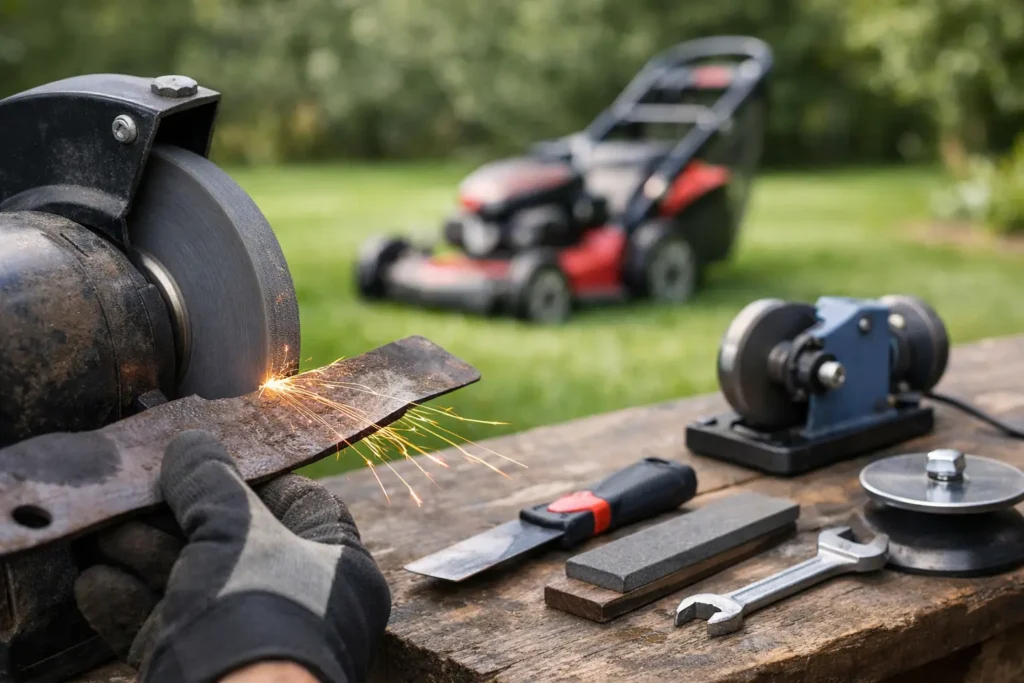
A bench grinder removes metal quickly and can restore a heavily worn cutting edge efficiently. It is a useful setup for professionals, frequent DIY users, or people maintaining multiple mower blades. It also demands a lighter touch than most people expect.
Pressing too hard creates heat, which can weaken the metal at the edge. Holding the blade at the wrong angle can change its cutting profile in seconds. A bench grinder is effective, but it is not automatically the best lawn mower blade sharpener for someone who sharpens one blade a couple of times a year.
Belt sharpener: best for consistent professional results
A belt-style sharpening system offers speed and control when used properly. The moving abrasive helps create an even edge without concentrating too much heat in one small area. It is often a strong choice for professional sharpening because it handles routine dullness, minor edge damage, and repeatable bevels well.
The equipment and experience required make this less practical for many households. If your goal is simply to keep a mower ready without adding another machine to maintain, professional service may be the more convenient option.
A Sharp Blade Is Not Always a Blade Worth Sharpening
Before choosing a sharpener, inspect the blade. Turn off the mower, disconnect the spark plug wire or remove the battery, and follow the mower manufacturer’s safety instructions before handling or removing any blade.
Look for cracks, severe bends, large missing chunks, or an edge that has been ground down too many times. A cracked blade should be replaced, not repaired. A bent blade can create damaging vibration and may not cut evenly even after sharpening. If the blade has become too narrow or worn, replacement is usually the safer call.
Surface rust is different. Light rust and ordinary dullness are usually manageable. A blade that has struck rocks, metal edging, or hidden yard debris deserves a closer inspection before it goes back on the mower.
How to Sharpen Without Creating a New Problem
The goal is to restore the existing cutting bevel, not reshape the entire blade. Clean the blade first so you can see the edge clearly. Secure it firmly, then make smooth, controlled passes from the body of the blade toward the cutting edge. Work only until the dull, rounded portion is replaced by a clean, even edge.
Avoid trying to make it knife-sharp. A lawn mower blade works by spinning at high speed and cutting grass with a durable angled edge. A moderate edge lasts longer and stands up better to normal lawn conditions.
Once both ends are sharpened, check balance. A simple blade balancer is helpful, but a nail fixed level in a wall can also provide a basic check. Hang the blade from its center mounting hole. If one side drops consistently, remove a small amount of metal from the heavier end, then test again. Do not keep sharpening the cutting edge blindly to correct balance, since that can change the bevel unnecessarily.
Reinstall the blade in the correct orientation, tighten it according to the mower manufacturer’s specifications, and make sure the underside of the mower deck is free of packed grass. A clean deck supports airflow and helps the sharpened blade do its job.
When Professional Sharpening Makes More Sense
A sharpening tool is useful, but it is not always the most efficient answer. If you do not have a vise, a safe workspace, or time to remove and reinstall the blade, the task can become an all-afternoon project. The same is true when the blade needs repair assessment, edge correction, and balancing rather than a quick touch-up.
Professional sharpening is particularly helpful at the beginning of mowing season, after an impact with hard debris, or when a mower starts leaving ragged brown tips across the lawn. It also makes sense for landscaping crews and property managers who need several blades maintained consistently. Keeping a spare set of blades lets a crew swap them out and stay on schedule while the other set is sharpened.
Sharper Tools LLC provides local lawn mower blade sharpening for customers who would rather spend their time mowing than setting up a grinding station. A professionally maintained blade can extend the useful life of the part while helping the mower run smoother and leave a cleaner-looking cut.
How Often Should You Sharpen a Mower Blade?
For a typical home lawn, inspect the blade after roughly 20 to 25 hours of mowing and plan on sharpening at least once each season. You may need more frequent service if your yard has sticks, sandy soil, uneven ground, or dense grass. Commercial operators often inspect blades far more often because a full day of mowing can quickly dull an edge.
The lawn itself provides clues. If freshly cut grass looks ripped rather than cleanly sliced, if the mower seems to miss patches, or if the tips turn brown shortly after mowing, inspect the blade. Those signs do not always mean sharpening is the only fix, but they are a good reason to check.
A sharp, balanced mower blade is one of the simplest ways to improve the look of a lawn without buying a new mower. Choose a sharpening method that fits your skill and schedule, and when the blade needs more than a quick touch-up, having it serviced is a practical way to keep your yard work moving.