A pair of scissors usually does not fail all at once. First, paper starts folding instead of cutting cleanly. Then fabric snags, kitchen prep gets messy, or packaging takes more force than it should. A good scissor sharpening maintenance guide helps you catch those signs early, protect the blades, and avoid wearing out a useful tool before its time.
For Seattle-area households and businesses, scissors tend to live hard-working lives. They open deliveries, trim herbs, cut twine, slice through food packaging, handle craft projects, and tackle daily tasks that seem small until the tool stops performing. The right maintenance is not complicated, but it does need to be consistent.
Why scissor maintenance matters more than most people think
Dull scissors are not just annoying. They can also be less safe. When blades stop cutting cleanly, people compensate by squeezing harder, twisting the tool, or using it on materials it was never meant to handle. That extra force can push the blades out of alignment, loosen the pivot, and create rough edges that make the next cut even worse.
There is also a cost issue. Many people replace scissors long before they need to. In plenty of cases, the real problem is not that the tool is worn out. It is that the edge is dull, the pivot is dirty, or the blades are slightly misaligned. Regular maintenance extends useful life and keeps everyday work moving, whether that means wrapping gifts at home or keeping prep stations efficient in a commercial kitchen.
A practical scissor sharpening maintenance guide for everyday use
Good scissor care starts before sharpening. If a pair feels dull, sticky, or uneven, clean it first. Adhesive residue, food buildup, dust, and fine fibers can all change how the blades move against each other. Wipe the blades carefully with a soft cloth and a little mild cleaner, then dry them fully. Moisture left near the pivot can lead to corrosion over time.
Next, check the pivot area. This is where a lot of performance problems begin. If the joint is packed with grime, the blades may drag or fail to close smoothly. A careful cleaning around the pivot often improves cutting more than people expect. After cleaning, a very small drop of light machine oil at the joint can help restore smooth movement. Too much oil attracts debris, so use less than you think you need and wipe away any excess.
Storage matters, too. Tossing scissors into a junk drawer with screwdrivers, clips, and loose hardware is a fast way to nick the edge. Keeping them dry and stored so the blades are protected makes a real difference. If you have scissors for different jobs, it also helps to keep them separated by use. The pair that cuts paper should not be the same one used on heavy packaging or wire-backed materials.
When scissors need sharpening, not just cleaning
A few warning signs point clearly to edge wear. One is folding or chewing paper instead of making a clean slice. Another is needing to start a cut several times before the blades bite. If the scissors cut near the pivot but not toward the tip, or vice versa, the issue may be sharpening, alignment, or both.
This is where it depends on the tool and how it is used. Household scissors with light wear may respond well to professional sharpening and a simple tune-up. Heavily used utility scissors can also often be restored, but if the blades are chipped, bent, or significantly worn down, the work becomes more than just edge maintenance. In those cases, sharpening alone may not solve the problem.
A common mistake is waiting too long. The duller the edge gets, the more stress the user puts on the pivot and blade faces. Sharpening earlier usually preserves more metal and helps maintain the original cutting action.
What not to do when trying to sharpen scissors at home
A lot of people have heard quick-fix advice about cutting abrasive materials or using random sharpening gadgets. Some of those tricks may create the feeling of improvement for a short time, but they often do not address the actual edge geometry. In some cases, they can make the blades rougher or remove metal unevenly.
Scissors are different from knives. The two blades need to meet at the correct angle and tension so they shear material cleanly. If that relationship changes, the scissors can still feel sharp to the touch and perform poorly in actual use. That is why home sharpening attempts sometimes lead to more frustration than results.
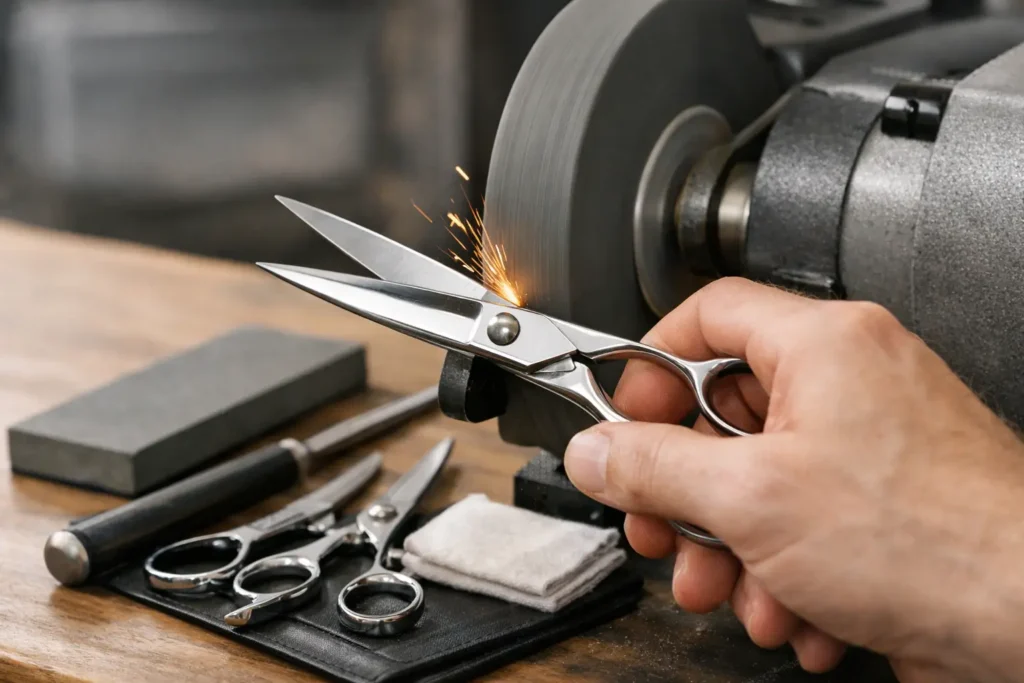
If you are working with a basic utility pair and accept some trial and error, home maintenance may be enough. But for kitchen scissors, fabric scissors, craft scissors, or any tool you rely on regularly, professional service is usually the safer choice. A proper sharpening should consider edge condition, alignment, pivot tension, and overall tool health.
How often should scissors be sharpened?
There is no perfect schedule because use varies so much. A pair used once a week for household tasks might go a long time with basic care and occasional sharpening. A pair used daily in food service, shipping, floral work, or production can need attention much sooner.
A better approach is to watch performance instead of the calendar. If cutting starts to feel less controlled, if the blades drag, or if you notice tearing instead of clean separation, it is time to have them checked. For businesses, this matters even more. A dull cutting tool slows down repetitive tasks and introduces inconsistency into work that should be routine.
For busy homes, a quick check every few months is reasonable. For commercial settings, especially where scissors are used every day, routine maintenance prevents downtime. It is the same idea as keeping kitchen knives in working order. Small upkeep is easier than waiting for a larger problem.
The role of professional service
A good sharpening service does more than grind an edge. It evaluates whether the blades are meeting correctly, whether the pivot needs adjustment, and whether the tool is worth restoring based on condition and intended use. That matters because sharpening is not one-size-fits-all.
Some scissors only need edge refinement and cleaning. Others need tension adjustment or minor correction to restore smooth cutting. A local service also has a practical advantage. You can get an honest answer about whether the scissors are good candidates for sharpening or whether replacement makes more sense. That kind of straight talk saves money and avoids guesswork.
For people juggling household tasks, work schedules, or business operations, convenience matters almost as much as the sharpening itself. Local pickup and drop-off options make maintenance easier to keep up with, which means tools are more likely to stay in service instead of sitting dull in a drawer.
Daily habits that help scissors stay sharper longer
The best maintenance routine is usually simple. Use scissors for the material they were meant to cut. Wipe the blades after dirty or sticky jobs. Keep the pivot clean and lightly lubricated when needed. Store them dry and protected. And do not force a pair through material that feels wrong for the tool.
That last point matters more than people realize. Using light household scissors on thick plastic clamshell packaging, dense cardboard, or other tough materials can damage the edge quickly. It can also push the blades out of true. One misuse does not always ruin a pair, but repeated misuse adds up.
It also helps to label specialty pairs if you have multiple scissors around the house or shop. When everyone knows which pair is for paper, which is for kitchen tasks, and which is for heavier utility work, the edges last longer and perform more consistently.
Scissor sharpening maintenance guide for homes and small businesses
For homeowners, the goal is usually straightforward: keep everyday tools cutting cleanly without needing frequent replacement. For small businesses, the goal expands to reliability. A dull pair of scissors can slow prep, packing, or production in ways that seem minor until they happen every day.
That is why maintenance should be thought of as part of tool ownership, not a last resort. The same way people care for mower blades, garden tools, or kitchen knives, scissors deserve periodic attention. It is a small service item that pays back in cleaner work, less effort, and longer tool life.
At Sharper Tools, that practical view of maintenance is what makes local service valuable. People do not need a lecture about edge geometry. They need scissors that work the way they should, and a straightforward way to keep them that way.
If your scissors are tugging, tearing, or getting harder to control, that is usually the tool asking for attention before a simple fix turns into a bigger problem.