
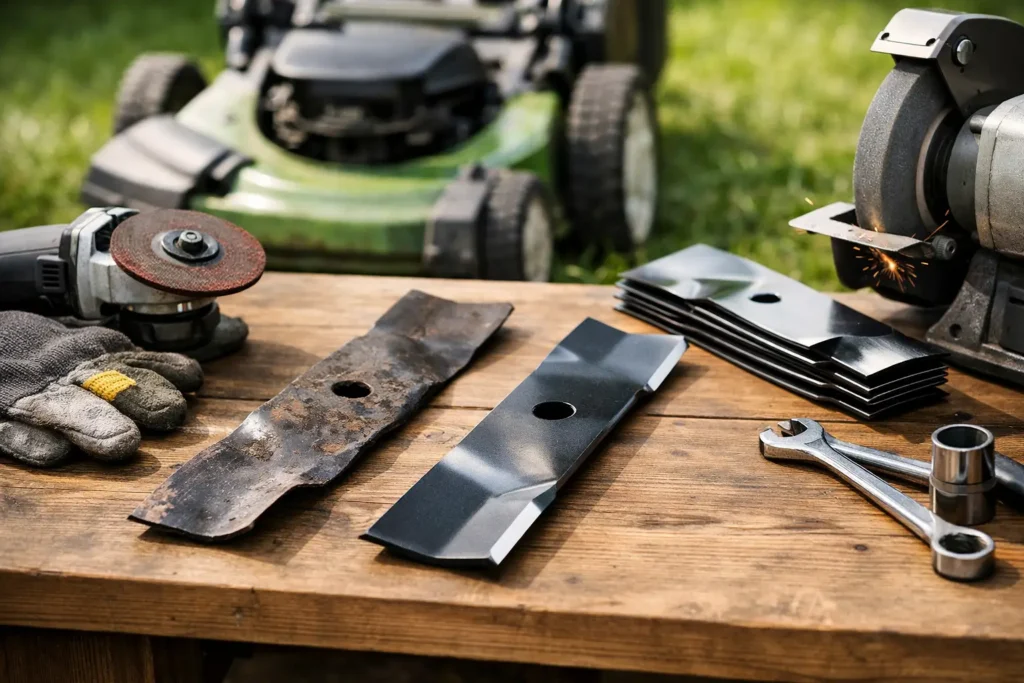
A ragged lawn cut usually shows up before most people think about the blade. You mow on Saturday, and by Sunday the grass tips look white, torn, and dry instead of clean and even. That is where mower blade sharpening replacement becomes a real decision, not just maintenance advice. A sharp, balanced blade cuts cleaner, puts less strain on the mower, and leaves the yard looking better with less effort.
For many Seattle-area homeowners, the question is not whether the blade matters. It is whether the blade you have can still be sharpened or whether replacing it will save time, protect the mower, and give you a better result. The answer depends on blade condition, how often you mow, what your yard throws at the deck, and how much edge is left to work with.
Mower blade sharpening replacement: what is the difference?
Sharpening restores the cutting edge that has become rounded over from normal use. Even if you avoid rocks and obvious debris, grass, soil, sticks, and occasional contact with hard surfaces slowly wear the edge down. A dull blade does not usually stop cutting altogether. It starts tearing instead of slicing, and that rough cut can make the lawn look uneven and stressed.
Replacement is different. That is for blades that are too worn, bent, cracked, deeply chipped, or heavily thinned from repeated sharpening. In those cases, grinding a new edge is no longer the smart move. You may get a temporary result, but you are working with damaged steel or not enough material to keep the blade strong and balanced.
This is why the decision is rarely just about sharpness. It is also about blade shape, thickness, safety, and whether the blade can still do its job without creating vibration or poor cutting performance.
Signs your mower blade needs sharpening
Most mower blades need sharpening more often than replacement. If the blade is structurally sound, sharpening is usually the practical fix.
The first clue is cut quality. If your grass tips look frayed or brown shortly after mowing, the blade is likely dull. You may also notice that the mower seems to work harder than usual, especially in thicker patches. A dull edge forces the machine to beat through the grass rather than cut it cleanly.
Another sign is a lawn that looks inconsistent even after a full pass. Sometimes people assume the deck height is off, when the real issue is that the blade edge is no longer doing clean work across its full length.
Seasonal use matters too. If you mow frequently during active growing months, the edge can lose performance faster than expected. Sandy soil, hidden sticks, and occasional contact with roots or edging all speed up wear.
When mower blade replacement makes more sense
There are times when sharpening is the wrong call. If the blade has a visible crack, it should be replaced. That is a safety issue, not a maintenance question. The same goes for a blade that is bent from impact. Trying to grind and rebalance a bent blade is usually not worth the risk or the inconsistent cut that follows.
Deep gouges and large missing chunks are another red flag. Minor nicks can often be sharpened out, but heavy damage changes the blade profile and removes too much material. Once that happens, the blade may no longer balance properly or move air through the deck the way it was designed to.
Then there is simple wear. Blades can only be sharpened so many times before they become too thin along the edge or across the sail area. If the metal is noticeably worn down, replacement is usually the better investment. You are not just paying for a sharper edge. You are restoring the blade geometry that helps the mower lift and cut grass correctly.
Why blade condition affects more than appearance
A lot of people notice dull blades because the lawn looks rough. That is reason enough, but it is not the only reason to pay attention.
A sharp blade helps reduce stress on the grass. Clean cuts heal faster and leave less exposed tissue at the tip. Torn grass is more vulnerable to browning and can make an otherwise healthy lawn look tired.
Blade condition also affects the mower itself. A damaged or badly worn blade can create vibration, and vibration is hard on bearings, spindles, and other deck components. That kind of wear sneaks up on people. What starts as a blade problem can become a more expensive equipment problem if it is ignored too long.
Fuel use and runtime can shift as well. When a mower has to fight through every pass with a poor edge, the work is less efficient. You may not notice it in one session, but over a season it adds up in time and strain.
How often should you sharpen or replace?
There is no perfect calendar because mowing conditions vary so much. A homeowner with a small, debris-free lawn may go much longer between services than someone mowing a larger yard with rough edges, hidden roots, or occasional gravel contact.
As a practical rule, many residential blades benefit from sharpening at least once or twice during the mowing season. Heavier use can justify more frequent attention. Replacement is less frequent, but regular inspection matters. If the blade has been sharpened several times, shows impact damage, or has lost noticeable material, it is worth evaluating before the next cut.
This is one of those cases where it depends is the honest answer. The best schedule follows the condition of the blade, not just the date on the calendar.
DIY or professional service?
Some owners remove and sharpen blades themselves, and if they have the right tools and know what to look for, that can work. But mower blades are not just sharpen-and-go parts. They also need proper inspection and balance. A blade that is technically sharp but uneven can still cut poorly and shake the machine.
That is where professional service earns its keep. A trained eye can tell the difference between a blade that needs a fresh edge and one that has reached the end of the line. That saves guesswork. It also saves people from reinstalling a blade that should have been retired.
For busy homeowners and landscaping customers, convenience matters too. When service includes easy drop-off or pickup options, routine maintenance becomes much easier to stay on top of. That is especially true in peak mowing season, when people want the mower ready to go, not sitting in pieces in the garage.
What a good sharpening job should include
A proper mower blade service is more than running a grinder across the edge. The edge should be restored at the correct angle without overheating the metal. The blade should also be cleaned, inspected for cracks and heavy wear, and checked for balance before it goes back into service.
Balance matters because even small differences in weight from one side to the other can create vibration. Over time, that can affect the mower deck and make the cut look uneven.
This is also why over-sharpening is not a good idea. A mower blade does not need a razor edge like a kitchen knife. It needs a durable cutting edge suited for grass and occasional contact with dirt and yard debris. Too fine an edge can wear down quickly.
Making the right call for your mower
If the blade is dull but otherwise solid, sharpening is usually the cost-effective move. If the blade is cracked, bent, badly chipped, or worn too thin, replacement is the safer and smarter choice. That may sound simple, but many blades fall somewhere in the middle, which is why inspection matters.
A practical local shop can help you avoid two common mistakes: replacing blades too early and keeping damaged blades too long. Both cost money. One wastes a part that still has life left, and the other risks poor performance or equipment damage.
For Seattle-area customers who want straightforward service, this kind of maintenance works best when it is easy to fit into a normal week. Sharper Tools LLC focuses on exactly that – practical sharpening support that helps people keep household and yard tools working the way they should.
A mower blade does not need much attention to make a big difference. Keep the edge in good shape, replace it when the steel says it is time, and your lawn will usually tell you you made the right call.