A dull kitchen knife turns dinner prep into a chore. A mower blade can tear grass instead of cutting it cleanly. Garden pruners that once made quick work of stems can start crushing them. When your tools need attention, pickup sharpening vs mail in is really a question of time, risk, and how quickly you need your equipment back in service.
For Seattle-area households and businesses, pickup service is often the practical choice because it keeps sharpening local and removes a trip from the to-do list. Mail-in sharpening can still make sense in a few situations, particularly when a specialty provider is the only option. The better fit depends on what you are sending, how often you use it, and how much downtime you can tolerate.
Pickup Sharpening vs Mail In: The Main Difference
Pickup sharpening keeps the process close to home. You arrange for your tools to be collected or dropped off locally, then receive them back once the sharpening work is complete. There is no packing material to find, no shipping label to print, and no concern about a package sitting in transit longer than expected.
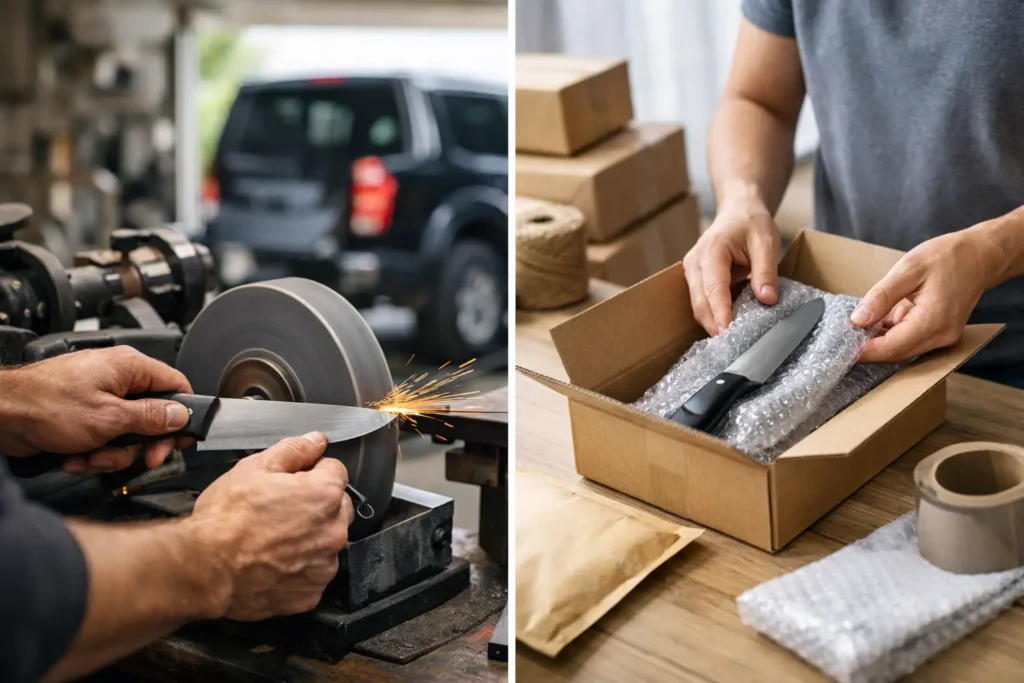
Mail-in sharpening requires you to package each item securely and ship it to a provider, often outside the area. The service may be convenient when you live far from a qualified sharpener, but it adds several steps before the actual sharpening even begins. You also need to account for shipping time in both directions.
That difference matters most for tools you rely on every week. A home cook may be able to work around a missing knife for a few days. A restaurant prep team, caterer, landscaper, or busy household may not have that flexibility. The faster and more predictable option is usually the one that causes the least disruption.
Why Local Pickup Is Usually Easier
The biggest advantage of pickup sharpening is simple: it protects your time. Instead of setting aside an afternoon to package tools and visit a shipping counter, you can place your dull items in a safe, organized spot for local collection or bring them to a nearby drop-off point.
It also gives you a clearer path if you have questions. Maybe you are unsure whether a knife has a chipped edge, whether your mower blade can be restored, or whether an old pair of fabric scissors is worth sharpening. With a local service, those conversations are more direct. You are working with people who understand the tools in front of them, rather than trying to explain their condition through a form or a few photos.
For many customers, local service also feels more accountable. Your tools stay in the community instead of moving through multiple shipping facilities. That reduces handling and makes it easier to know where your order is in the process.
Less packaging, less risk
Shipping sharp tools safely takes more care than many people expect. Blades need to be cleaned, protected, secured so they cannot shift, and packed in a sturdy box. If a knife point or garden tool edge breaks through weak packaging, the shipment can be delayed or rejected. Poor packing can also put handlers at risk.
Pickup avoids much of that work. You should still protect sharp points and edges for safe handling, but you do not need to engineer a box that can survive sorting belts, trucks, and warehouse handling. That is especially useful for awkward items such as mower blades, long garden tools, or several knives at once.
Better for regular maintenance
Sharp tools stay in better condition when they are maintained before they become badly worn. That is easier to do when the service itself is easy to use. If mailing requires a big packing project every time a knife starts dragging through a tomato, people tend to wait too long.
Local pickup supports a more realistic routine. Home cooks can gather kitchen knives, scissors, and garden tools in one batch. Property owners can include mower blades before the next stretch of lawn care. Commercial kitchens can set a consistent schedule rather than waiting for multiple knives to become a problem.
For restaurants and caterers, a knife exchange program can be even more useful. Sharper Tools’ Knife Swap & Go service is built around keeping working knives available, so kitchen staff can continue prep without waiting on the same knives to return.
When Mail-In Sharpening Can Make Sense
Mail-in service is not automatically the wrong choice. It can be a reasonable option when a tool has a very specialized design and the right expertise is only available from a distant provider. It can also work for someone who has plenty of backup tools, does not need a quick turnaround, and is comfortable packaging items carefully.
Some customers choose mail-in service because they already use a particular maker or specialty shop. If that provider understands a specific blade profile or tool type better than anyone nearby, the extra logistics may be worth it. The key is to compare the full experience, not just the sharpening price.
Shipping charges, packing supplies, insurance, and the possibility of transit delays can change the value equation. A low advertised sharpening price may not be low once you add the cost and time of sending the tools away. For everyday knives, standard scissors, garden tools, and mower blades, local service often delivers better practical value.
Compare Turnaround, Not Just Price
When choosing between pickup and mail-in sharpening, ask how long your tools will be out of use from start to finish. A mail-in order includes the time it takes you to package it, travel to a shipper, send it out, wait for processing, and receive the return shipment. Even if the sharpening itself is quick, the total turnaround can stretch longer than expected.
Pickup service has its own schedule, of course. Local routes, drop-off timing, and the number of tools in an order all affect completion time. Still, the process removes the two shipping legs that create much of the uncertainty.
Price should include more than the service line on a receipt. Consider whether you are paying for boxes, padding, tape, shipping, return shipping, and insurance. Consider the cost of replacing a tool if it is lost or damaged in transit. Then consider the cost of working with dull equipment for an extra week.
For a restaurant, that cost may show up as slower prep and more staff frustration. For a homeowner, it may mean putting off a weekend project. For a gardener, it can mean making rough cuts that are harder on plants. Sharpening is maintenance, but the delivery method affects whether that maintenance actually fits your life.
What to Send Together for Pickup
Pickup is particularly useful when several tools need attention at the same time. Rather than mailing separate packages over the year, group the items that are used in the same season or area of your home.
Kitchen knives and household scissors are a natural combination. Garden pruners, loppers, and other hand tools can be handled as a garden-care batch. Mower blades are often best scheduled before or after peak mowing season, when you have time to take the mower apart safely and notice how the lawn has been cutting.
Before setting tools aside, clean off food residue, soil, grass, and moisture. Keep blades dry, cover sharp edges where practical, and let the sharpener know about chips, loose handles, bent areas, or other visible damage. A sharpening service can restore an edge, but an honest look at the condition of the tool helps set the right expectations.
Choose the Service That Keeps Tools Working
The best option is not always the one with the lowest advertised price or the most complicated process. It is the one you will actually use before dull tools become frustrating, unsafe, or expensive to replace.
Mail-in sharpening has a place for specialty needs and customers without a trusted local provider. But for most everyday cutting tools in the Seattle area, pickup or local drop-off offers a more direct path: less packaging, fewer transit concerns, easier communication, and less time without the tools you depend on.
Set aside the knife that slips on onions, the scissors that chew through paper, or the mower blade leaving ragged grass tips. A small maintenance task now can make the next meal, yard project, or work shift noticeably easier.