
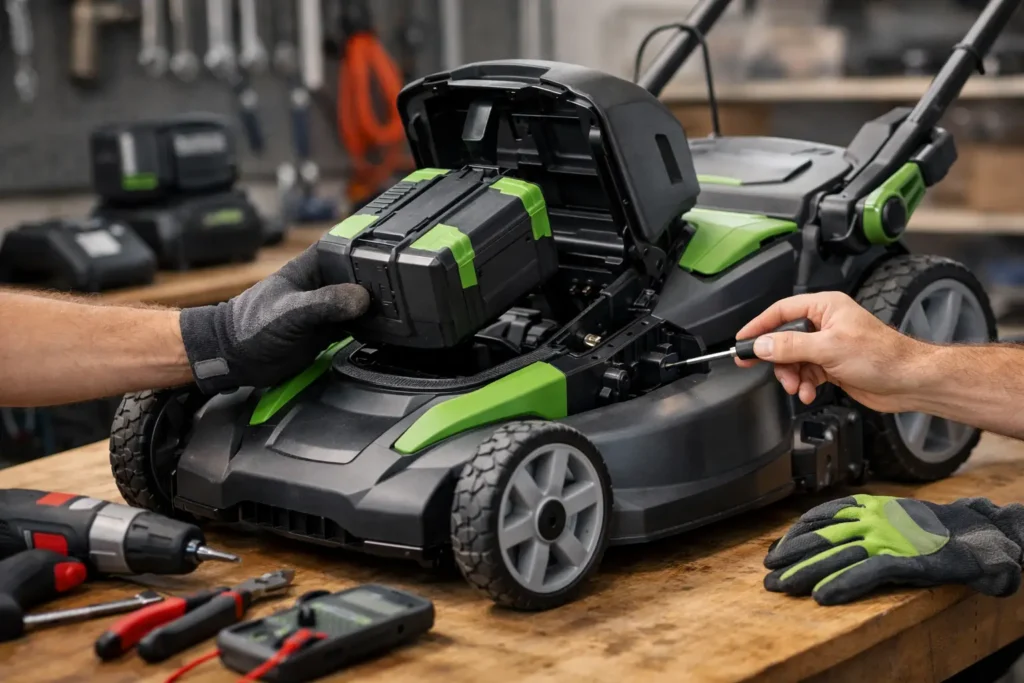
A battery mower that stops halfway through a Seattle yard can be frustrating, especially when the grass is growing fast and the weather window is short. Battery powered mower repair often starts with a few practical checks, not an immediate parts replacement. A loose battery connection, packed grass clippings, a dull blade, or a charger issue can all make a mower feel weaker than it really is.
The key is to work safely and separate a simple maintenance problem from a repair that needs a qualified technician. Cordless mowers are convenient, but their batteries, electronic controls, and safety systems are less forgiving than a basic gas mower engine. Start with the easy items, and stop before a small issue turns into damaged equipment.
Start Battery Powered Mower Repair Safely
Before inspecting anything underneath the deck, remove the battery completely. Set the mower on a flat, dry surface, keep hands away from the blade area, and do not rely on the mower’s power switch alone. A battery-powered mower can start unexpectedly if its battery remains installed and a safety control is engaged.
Let the mower cool down if it has been working hard. Then brush away loose grass from the top of the deck, battery compartment, vents, and handle controls. Avoid spraying water directly into the battery bay, motor housing, or electrical controls. Seattle’s wet conditions already expose lawn equipment to plenty of moisture, so keeping those areas dry matters.
If you notice melted plastic, a burning smell, swollen battery casing, cracked wiring, or corrosion around the contacts, do not keep testing the mower. Those are signs to stop using it and seek professional service or manufacturer support.
1. Check the Battery Before Blaming the Mower
A battery can show a full charge at rest yet lose power quickly under mowing load. First, confirm that the battery is seated firmly and the terminals are clean and dry. Fine dust, damp grass, and oxidation can interfere with the connection.
Charge the battery using its matching charger on a dry indoor surface. Watch for warning lights or an abnormal charging pattern. If you have two compatible batteries, test the mower with the second one. When one battery performs normally and the other does not, the mower may be fine and the battery may be nearing the end of its useful life.
Battery run time also depends on the job. Tall, damp Pacific Northwest grass asks much more of a mower than a dry, regularly cut lawn. A reduced run time after tackling overgrown grass is not always a repair issue. Consistently short run time on light, dry grass is more concerning.
2. Inspect the Charger and Power Source
A charger problem can look exactly like a weak battery. Plug the charger into a known-working outlet and check that its indicator lights behave as expected. Inspect the charger cord and plug for cuts, bent prongs, or heat damage. Never use a damaged charger or try to repair its cord with tape.
If the charger flashes an error code, consult the mower’s manual for that exact model. Some errors point to a battery temperature problem rather than a failed battery. A battery brought in from a cold garage or left in a hot vehicle may need time to return to room temperature before charging normally.
3. Clear the Mower Deck and Air Vents
Grass buildup underneath the deck makes the blade work harder. It can also restrict airflow around the motor, which may cause the mower to shut down as a protective measure. With the battery removed, tip the mower only as directed in its manual and use a stiff brush or plastic scraper to remove packed clippings.
Pay attention to the discharge chute, mulch plug, and collection bag area. A blockage there can leave clumps of grass behind and make the mower sound strained. Clean the exterior vents as well, using a dry brush or low-pressure air. Do not force debris deeper into the motor housing.
A mower that runs normally for several minutes and then stops may be overheating from blocked airflow, heavy grass, or a dull blade. Let it cool before trying again. Repeatedly restarting an overheated mower is hard on both the battery and motor.
4. Look Closely at the Mower Blade
A dull mower blade is one of the most common causes of a poor-looking lawn and unnecessary battery drain. Instead of slicing cleanly through grass, a blunt edge tears it. The mower then needs more power, the battery runs down faster, and grass tips can turn brown after cutting.
With the battery out, inspect the blade for rounded edges, deep nicks, bends, cracks, or heavy rust. A bent or cracked blade should be replaced, not sharpened. If the blade is intact but dull, professional lawn mower blade sharpening restores a clean cutting edge while preserving the blade’s balance.
Balance is not a minor detail. Removing too much material from one end can create vibration that puts extra stress on the mower shaft, motor, and deck. A sharpened blade should cut efficiently without making the mower shake or rattle.
For many homeowners, blade care is the most worthwhile maintenance step because it improves cut quality and can help the mower use its battery more efficiently. Sharper Tools LLC provides local mower blade sharpening for customers who want their equipment ready for the next mowing day without replacing a serviceable blade.
5. Check the Height Setting and Your Cutting Routine
Not every weak-cutting mower has a mechanical fault. If the mower bogs down, raises its noise level, or leaves uneven strips, raise the deck height and make a second pass later. Cutting only a portion of the grass height at one time reduces strain on a battery-powered mower.
Mow when the lawn is dry whenever possible. Wet grass is heavier, sticks under the deck, and drains battery capacity quickly. It also clumps more easily around the blade. If rain has been frequent, give the lawn enough drying time before deciding the mower needs repair.
A slower walking pace can help, but it will not solve a dull blade or packed deck. Use that adjustment as part of a sensible mowing routine, not as a way to push a struggling mower through a problem.
6. Test the Safety Controls and Handle Connections
Most battery mowers will not start unless the handle is fully extended, locked into position, and the safety key or lever is correctly engaged. Check for loose handle joints, pinched cables, or controls that feel sticky. Foldable mower handles are useful for storage, but their connectors can loosen after repeated use.
If the mower starts only when you hold the handle or cable in a certain position, stop using it. That can point to a damaged switch, wire, or connection that needs proper repair. Do not bypass a safety control to keep mowing. Those systems are designed to prevent accidental starts and blade operation.
7. Know When Repair Is Worth It
Battery powered mower repair is usually worthwhile when the issue is maintenance-related: a dull blade, dirty deck, worn switch, loose connection, or replaceable safety component. It becomes less straightforward when the motor controller, battery management system, or motor itself has failed.
The right decision depends on the mower’s age, original price, battery condition, and parts availability. If a mower is several years old and its batteries also have limited run time, a major electrical repair may not offer good value. On the other hand, a newer mower with a sharp blade, healthy battery, and one faulty control can be a sensible repair candidate.
Keep the model number and battery information handy when requesting service. Clear details about when the mower stops, whether it makes a sound, how long the battery lasts, and whether warning lights appear can save time during diagnosis.
A mower does not need to be complicated to deserve regular care. Keep the deck clean, protect the battery from extreme temperatures, and have the blade sharpened before it starts tearing grass. Those small habits make the next clear weekend feel less like a repair project and more like a job you can finish with confidence.