Spring yard work has a way of exposing every dull edge in the garage. Pruners start crushing stems instead of cutting them cleanly, loppers need too much force, and a shovel that used to bite into the soil now just skids across the top. If you have searched for garden tool sharpening near me, you are probably not looking for theory. You want your tools working again without wasting half a weekend trying to fix them yourself.
That is exactly where a local sharpening service makes sense. For Seattle-area homeowners, gardeners, and landscape crews, sharpening is less about perfection and more about getting reliable performance back into the tools you already own. A good edge makes gardening easier, safer, and noticeably faster.
Why garden tools get dull faster than most people expect
Garden tools do rough work. They hit dirt, grit, roots, wet branches, small rocks, and sometimes hidden metal edging or wire. Even quality steel loses its edge when it is used in those conditions over and over. Add in our wet Pacific Northwest weather, and corrosion can make the problem worse.
The tricky part is that dullness often creeps in slowly. You adjust your grip, push a little harder, and work around the problem until the tool becomes frustrating to use. By then, the blade edge may not be the only issue. Rust, burrs, nicks, and poor alignment can all affect performance.
That matters because a clean cut is not just about convenience. On pruners, hedge shears, and loppers, a sharper edge helps reduce tearing on live plant material. On digging tools, a refreshed edge helps the tool move through compact soil with less strain on your wrists and shoulders. The result is less effort and better control.
What to expect from garden tool sharpening near me
When people look up garden tool sharpening near me, they usually want three things – a local option, a quick turnaround, and confidence that the tool will come back in working condition. Those are reasonable expectations, but it helps to know what professional sharpening actually includes.
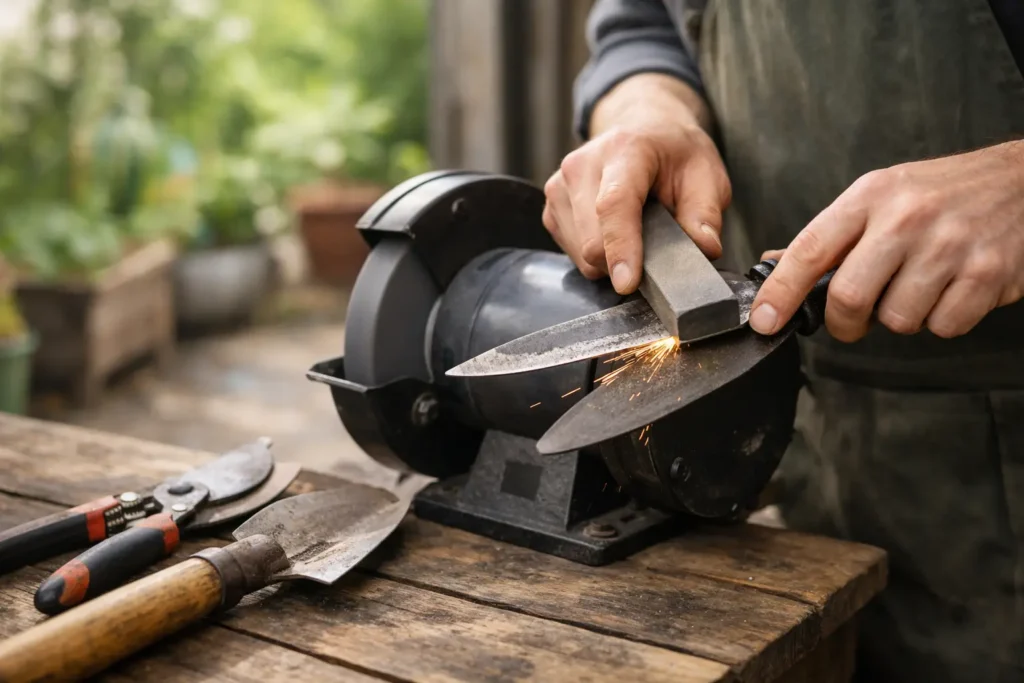
For many garden tools, sharpening is not only about grinding a new edge. It can also involve cleaning buildup, removing light rust, reshaping damaged bevels, and checking whether moving parts still line up correctly. Pruners and loppers, for example, may need attention to both the blade and the overall action. If the edge is sharp but the tool binds or slips, the job is only half done.
The best local providers also understand the difference between tool types. A bypass pruner should not be treated the same way as a shovel, and hedge shears need a different approach than an axe or mattock. Proper sharpening keeps the original function of the tool intact instead of just making it thinner.
There is also a practical benefit to staying local. You do not have to box up heavy or awkward equipment, guess at shipping damage, or wait for an out-of-town service window. For busy households and working crews, local pickup and drop-off can make the difference between actually getting the job done and putting it off another month.
Which garden tools are worth sharpening
Almost any well-made garden tool is worth sharpening if the body and handle are still in decent condition. Hand pruners are one of the most obvious examples because a dull edge shows up immediately in use. Loppers, hedge shears, shovels, spades, hoes, axes, and similar tools can all benefit as well.
In many cases, sharpening is more cost-effective than replacing. A sturdy pair of pruners or a solid digging tool often has plenty of life left even if the edge has gone dull. Replacing tools every season adds up, especially if you maintain a larger yard or manage tools for a crew.
That said, it depends on the condition. If a blade is cracked, severely pitted, or worn down beyond practical repair, replacement may make more sense. A trustworthy sharpening service should be honest about that. The goal is not to force every old tool back into service. It is to help customers get useful life from the tools that are still worth keeping.
DIY sharpening versus professional service
A lot of homeowners wonder whether they should just sharpen garden tools themselves. Sometimes that is a fair option. If you are comfortable with files, stones, or grinders and you know the correct bevel for the tool, basic maintenance can help between professional sharpenings.
But there are trade-offs. It is easy to remove too much metal, alter the edge angle, or create an uneven bevel that makes the tool cut poorly. Powered grinding can also generate excess heat if handled incorrectly, which can affect the steel. On hand tools with moving parts, the edge may not be the only thing causing poor performance.
Professional sharpening is often the better choice when the tool has visible damage, when it needs reshaping rather than touch-up work, or when you simply want the job done quickly and correctly. For many customers, convenience is the deciding factor. If the choice is between having a pro handle it this week or leaving dull tools untouched until next season, service wins.
Safety is a bigger reason than most people think
Many people assume dull tools are safer because they feel less aggressive. In practice, the opposite is often true. Dull blades require more pressure, more awkward body positioning, and more repeat effort. That increases the chance of slips, poor cuts, and fatigue.
A sharp pruner closes with control instead of forcing your hand through thick stems. A sharpened shovel enters the ground with less stomping and twisting. Better edge performance means you can let the tool do more of the work.
This is especially important for older adults, busy homeowners trying to move quickly, and professionals using tools all day. Reducing strain is not a small benefit. It helps protect hands, wrists, shoulders, and backs over time.
How to choose a local sharpening service
Not every sharpening provider handles garden tools with the same level of care. Some focus mostly on kitchen items and only occasionally take on outdoor equipment. Others may sharpen aggressively without paying attention to tool geometry or practical use.
A good local service should be able to explain, in plain language, what they sharpen, how the process works, and what kind of turnaround to expect. They should also make logistics easy. That matters in a city like Seattle, where convenience often determines whether a maintenance task gets done at all.
Look for a provider that values tool longevity, not just quick metal removal. The best sharpening work preserves the function of the tool and supports regular upkeep over time. If pickup and drop-off are available, that is a real advantage for customers juggling work, home responsibilities, and seasonal yard tasks.
For Seattle customers, Sharper Tools LLC fits that practical local-service model. The focus is straightforward: keep essential tools working well, make the process convenient, and help people avoid replacing items that still have plenty of life left.
Timing matters more than people realize
The best time to sharpen garden tools is usually before the busy season starts, not after tools have already become frustrating. Early spring is the obvious rush period, but summer touch-ups and fall maintenance can be just as useful depending on how heavily you use your tools.
If you wait until every edge is badly worn, turnaround timing may feel more urgent because the tools are already affecting your work. Planning ahead gives you more flexibility and helps you stay ready for the next round of pruning, bed prep, cleanup, or planting.
For commercial users and serious home gardeners, regular sharpening is part of routine maintenance, just like cleaning and proper storage. It saves time in the long run because sharp tools work predictably.
Why local sharpening is a practical investment
People often think of sharpening as a small maintenance detail, but it has a real effect on daily work. Better cutting performance means less wasted motion, less frustration, and fewer half-finished tasks because the tool is fighting you at every step.
It is also a smarter use of money. Replacing durable tools because they have gone dull is usually unnecessary. Keeping them maintained supports sustainability, reduces waste, and helps you get more from what you already own.
For Seattle households, gardeners, and landscape professionals, local sharpening is not about making tools look fancy. It is about getting dependable results from the equipment you rely on. When your pruners, loppers, shears, and digging tools are properly sharpened, the work feels lighter and moves faster. That is usually all the proof you need to stop searching and finally get the job done.